
A Parent’s Guide to Early Learning in Edensor Park
Early learning is one of those phrases parents hear everywhere, but it is not always explained in a useful way.
Does it mean teaching babies and toddlers formal lessons? Is preschool mainly about getting children ready to read and write? How much of the day is planned, and how much time do children simply spend playing?
When families begin exploring early learning in Edensor Park, these are sensible questions to ask. You are not only choosing where your child will spend part of the week. You are trying to understand what they will experience, who will care for them and how those hours away from home may support their development.
We created this guide to talk you through the whole picture. That includes what early learning looks like at different ages, how educators use play, what happens during an ordinary day and how families remain involved once care begins.

Early Learning Begins Long Before Preschool
Children begin learning from the moment they start noticing the world around them.
A baby learns that a familiar voice can offer reassurance. A toddler learns that a gesture, sound or word can communicate a need. A preschooler learns how to explain an idea, wait for a turn, solve a disagreement and keep trying when something does not work the first time.
These experiences may look simple from the outside, but they are building important foundations.
Quality early learning supports the whole child. It includes communication, movement, relationships, emotional wellbeing, curiosity, independence, creativity and thinking. Early literacy and numeracy are part of that development, but they are not separated from everything else or forced before a child is ready.
Kids Central’s programs are informed by the Early Years Learning Framework, Australia’s approved learning framework for children from birth to five years. The framework recognises play-based learning, secure relationships, family partnerships, inclusion, responsiveness to children and thoughtfully planned learning environments as important parts of early education. You can read more about the Early Years Learning Framework through ACECQA.
What Early Learning Looks Like for a Baby
When your child is very young, learning and care are inseparable.
Feeding, changing, sleeping, being comforted and spending time on the floor are all parts of the educational day. A baby learns through repeated interactions with educators who respond to their cues and gradually become familiar people.
That is why a nursery should not feel like a miniature preschool classroom. Babies need an environment that respects their individual rhythms and provides safe opportunities to move, observe, listen, touch, and communicate.
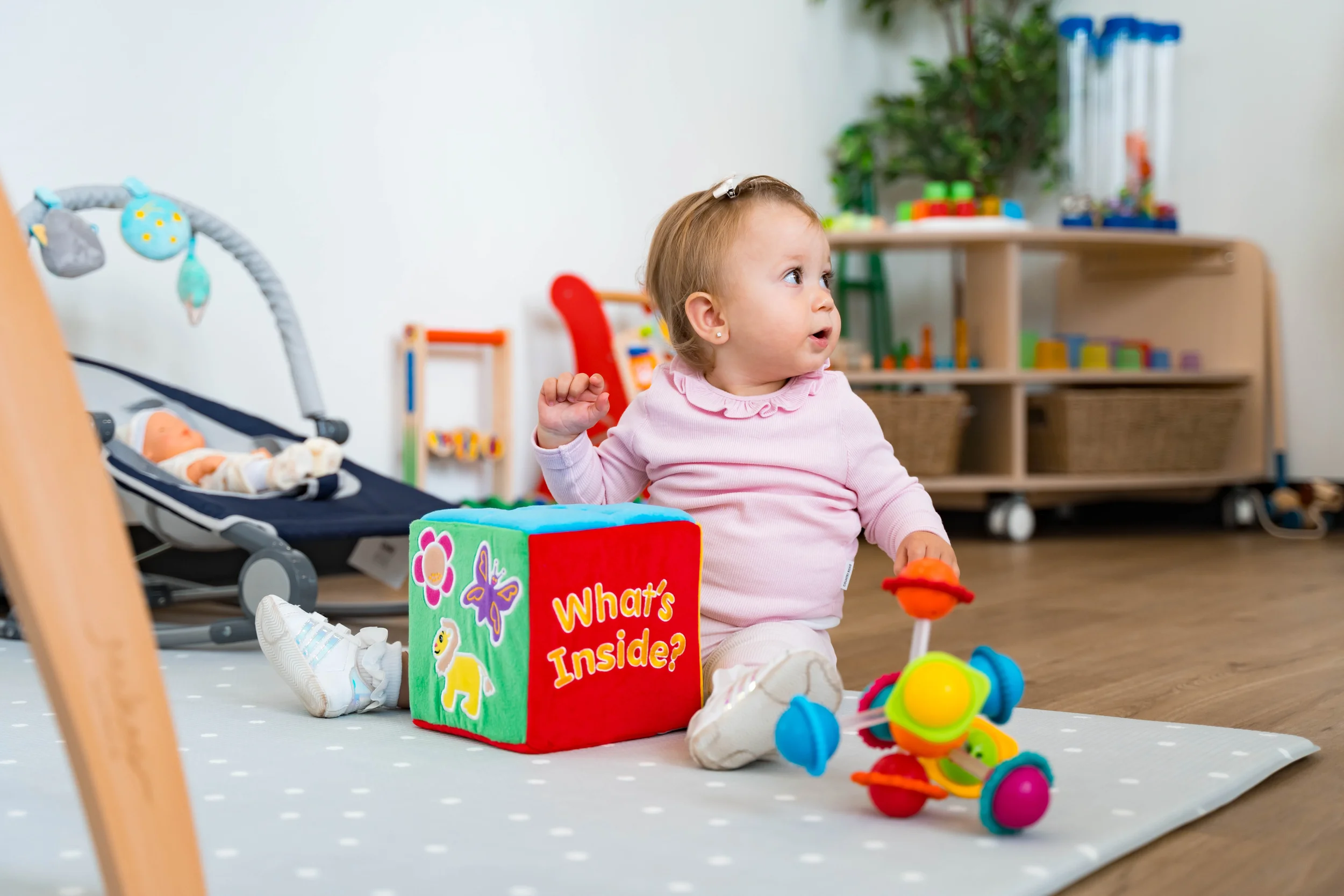
In the Billy Button Nursery Program, Kids Central cares for children from six weeks of age. The nursery includes designated indoor and outdoor spaces, age-appropriate sensory and movement resources, sleeping arrangements, qualified educators and communication with families about feeds, changes, activities and developmental progress.
Routines provide more than practical care
A predictable routine can help a baby understand what is happening next.
An educator may speak gently before lifting a child, name the items being used during a change or pause to let the baby respond with an expression, movement or sound. These moments help build communication and trust.
At the same time, a good nursery should not expect every baby to follow exactly the same schedule. Families may have different feeding patterns, sleep routines, settling methods and cultural practices. Educators need to learn about those routines and discuss how they can be supported within the centre environment.
Before your baby starts, it helps to share:
Their usual sleep signs and settling preferences
Feeding times and current food experiences
Words, songs or sounds they find comforting
How they show hunger, tiredness or distress
Any allergies, medical needs or developmental considerations
Important family and cultural routines
What usually helps them feel calm with another trusted adult
The more educators understand at the beginning, the less they need to guess.
Movement is part of the curriculum
Babies learn through their bodies.
Reaching, rolling, sitting, crawling, pulling up and walking all require practice. These movements also help children understand distance, balance, cause and effect and how their bodies relate to the environment.
A well-planned nursery gives babies enough safe floor time rather than keeping them in restrictive equipment for long periods. Resources should be placed where children can notice them, reach for them and explore them at their own pace.
The role of the educator is not to rush development. It is to create opportunities, observe closely and offer support when needed.
The Toddler Years Are Full of Big Learning
Toddlers are developing independence while still needing a great deal of emotional support.
They may want to do something on their own and become frustrated when their body or language cannot yet manage it. They may understand more words than they can say. They may play beside another child one moment and strongly object when that child touches a toy the next.
These reactions are not signs that a toddler is failing to socialise. They are part of learning how to communicate, manage feelings and live alongside other people.
The Lilly Pilly Toddler Program combines age-appropriate learning experiences with indoor and outdoor play, nutritious meals, communication with families and opportunities involving stories, music, art, movement and games. Kids Central also describes outdoor access to nature and water play as part of the program.
Language develops through real conversations
A toddler does not learn language only by being asked to repeat colours, numbers or animal names.
Language grows when educators talk with children about what they are doing, give them time to respond and introduce words that help them express ideas and feelings.
An educator might say:
“You are holding the bucket under the water. It is getting heavier.”
This gives the child language connected to an experience they can see and feel.
Educators can also support children who communicate in different ways. A child may use gestures, facial expressions, sounds, single words, home-language words or visual supports. Communication should not be reduced to spoken English alone.
Social skills need patient guidance
Toddlers are still learning that other people can want something different from them.
Telling a two-year-old to “share nicely” may not give them enough information. They may need an educator to acknowledge the conflict, help each child communicate and offer a manageable next step.
For example:
“You are using the truck, and Noah would like a turn. You can finish driving it to the blocks, then we will pass it to him.”
This does not mean every disagreement will end peacefully. It does mean children are being shown how to understand the situation rather than simply being punished for struggling with it.
Independence grows through small responsibilities
Toddlers often want to participate in everyday tasks.
They may carry their drink bottle, place a plate on the trolley, attempt to put on a hat or help return resources after play. These actions take longer than having an adult complete everything, but they give children a sense of capability.
Independence in early learning is not about expecting a young child to cope alone. It is about offering enough support for them to take the next manageable step.
Preschool Is More Than Preparation for School
Preschool-aged children are becoming increasingly interested in how the world works.
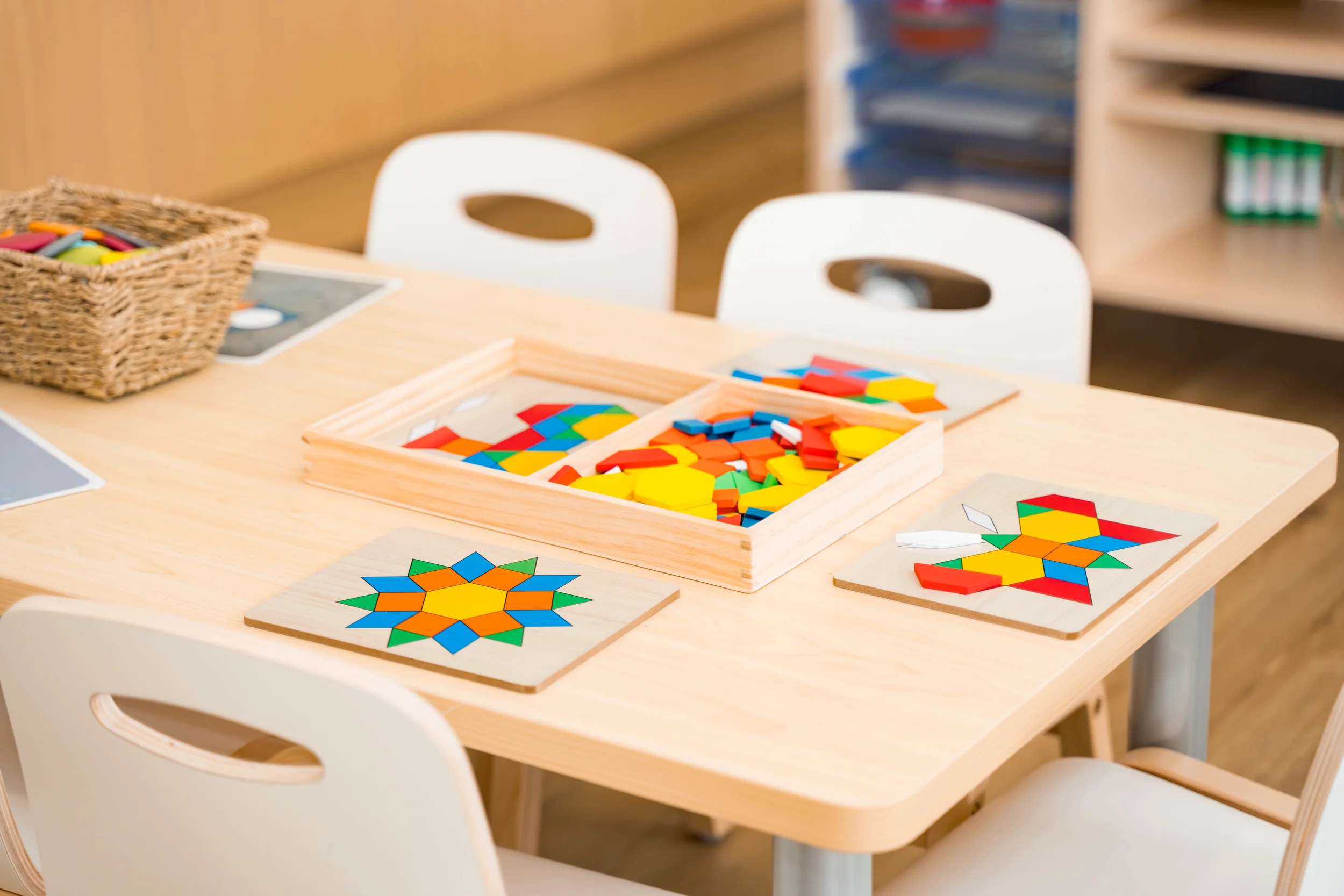
They ask questions, build theories and revisit ideas through play. They may create detailed imaginary stories, negotiate rules with friends, recognise familiar signs or become curious about numbers, names and written messages.
A thoughtful preschool program takes those interests seriously.
Kids Central’s Desert Rose Preschool Program includes structured and unstructured experiences, play-based learning, indoor and outdoor activity, social development, communication with families and transition-to-school support.
Early literacy appears in many forms
Early literacy is not limited to worksheets or correctly writing the alphabet.
It can include:
Listening to and retelling stories
Recognising a written name
Drawing symbols and explaining what they mean
Hearing rhyme and rhythm
Making up songs
Asking what a sign says
Dictating a message to an educator
Using books during imaginative play
Learning new words through conversation
A child who creates a pretend café menu may be exploring the purpose of writing. A group acting out a familiar story may be learning sequencing, memory, language and perspective.
These experiences help children understand why people read and write before they are expected to master the mechanics.
Numeracy is part of everyday problem-solving
Children encounter mathematical ideas throughout the day.
They compare which tower is taller, count plates at lunch, notice a repeating pattern, divide play materials among friends and work out whether a block will fit into a space.
Educators can extend this thinking by asking questions, introducing mathematical language or adding resources that invite further investigation.
The aim is not to turn play into a hidden test. It is to notice the learning already happening and help children go further.
Readiness includes emotional and practical skills
Parents sometimes feel pressure to ensure a child can read, write, or complete formal work before school begins.
Those skills are not the whole picture.
A child also benefits from being able to:
Communicate a need
Separate from a parent with support
Listen to another person
Participate in a group
Manage personal belongings
Ask for help
Use the toilet with growing independence
Cope when plans change
Persist with something challenging
Form relationships with unfamiliar adults and children
Kids Central’s Transition to School Program addresses social, emotional, physical and cognitive development alongside early literacy and numeracy. The program also includes individualised planning, school-routine familiarity and support for families approaching the move to primary school.
Play Is Not Time Away From Learning
Children use play to make sense of experiences that are still new to them.
When children build with loose parts, they may be testing balance and stability. When they run a pretend medical clinic, they may be exploring roles, language, empathy and past experiences. When they mix water, sand and leaves, they may be comparing texture, volume and change.
The learning is real even when the child does not produce something to take home.
This can be difficult for parents when the most visible evidence of the day is a painting or craft item. A photograph of a finished product is easy to understand. A child becoming more confident in joining a group, explaining an idea or working through frustration may be less visible, but it can be equally important.
Educators bring intention to play
Play-based learning does not mean educators stand back and leave children to occupy themselves all day.
An educator may:
Add a new resource that extends an existing interest
Introduce words related to what children are doing
Help children recall an earlier experience
Ask a question that encourages prediction
Demonstrate a safe way to use a tool
Support children to solve a social problem
Record an observation and plan a follow-up experience
Adapt an activity so another child can participate
The educator’s decision may be subtle because the child remains active in the learning. That is one of the strengths of the approach.
What a Day in Early Learning May Include
Parents sometimes imagine childcare as a strict timetable in which every child moves from one scheduled activity to the next.
There is usually a rhythm to the day, but children also need flexibility.
A day may include:
Arrival and time to reconnect with educators
Indoor or outdoor exploration
Small-group or whole-group experiences
Meals and snacks
Nappy changes or toileting
Rest or sleep
Stories, music and movement
Creative and sensory experiences
Physical play
Conversations with educators
Child-led investigation
Transitions between spaces
Departure and communication with families
The order and timing can change according to the children, the weather, planned experiences and individual care needs.
Babies may sleep and eat according to their own routines. Toddlers may need extra time during a transition. Preschoolers may remain deeply involved in a project that is worth continuing rather than being stopped because the clock has reached a particular minute.
A predictable day can help children feel secure, but predictability does not require rigidity.
The Environment Influences How Children Participate
The learning environment includes much more than the building itself.
It includes how resources are arranged, whether children can reach what they need, where they can rest, how noise travels through the room and whether the space supports different types of play.
At Kids Central, indoor and outdoor environments are planned to support exploration, movement, creativity and development. The Edensor Park centre describes purpose-built facilities, age-appropriate materials, spacious play areas and opportunities for hands-on learning.
Natural and open-ended resources allow different ideas
Some toys have one obvious purpose. Open-ended materials can be used in many ways.
A collection of timber pieces might become a road, enclosure, bridge, shop counter or part of a pattern. Stones, leaves, shells, fabric and recycled materials can invite sorting, constructing, storytelling and sensory investigation.
These resources leave more decision-making to the child.
They can also connect children with natural textures and differences that are not always found in highly uniform plastic equipment.
Children need active and quiet spaces
Not every child wants to participate in the same way at the same time.
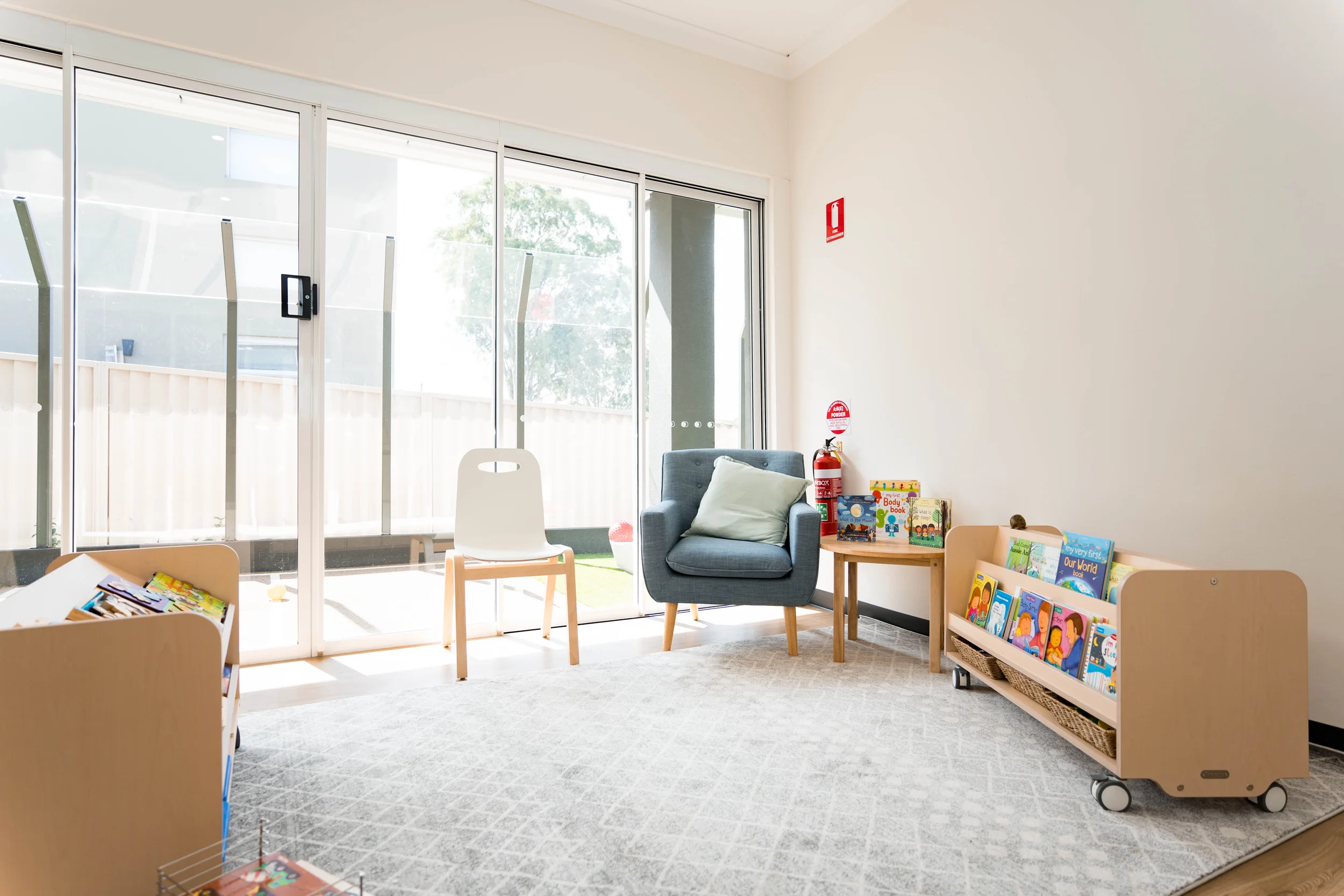
A busy room can be exciting, but children also need places where they can read a book, complete a puzzle, talk with one other person, or take a break from a large group.
Thoughtful design makes room for both energy and calm.
Outdoor spaces should offer more than fixed equipment. Nature, water, sand, loose materials, gardens, shaded areas and open space can support physical development, investigation and imaginative play.
Care Routines Are Part of a Child’s Well-being
Meals, toileting, rest, sun protection and hygiene are not interruptions to learning. They are significant parts of a child’s day.
Children should experience these routines with dignity and respect.
An educator can involve a child in a nappy change by explaining what is happening and responding to their cues. A preschooler can be supported to manage clothing without being embarrassed when they need help. A child who is not ready to sleep can still be given a calm opportunity to rest.
Food should support health and belonging
Kids Central’s daily fees include five nutritional meals prepared each day by an on-site cook. The service also states that it provides alternative ingredients for various allergies and uses allergy documentation and cross-contamination controls.
A menu matters, but the way mealtimes are handled matters too.
Children may arrive with different food experiences, cultural preferences, sensory responses and levels of confidence around unfamiliar meals. Pressure and judgement rarely help. Educators and families can achieve more by sharing information and approaching food patiently.
Parents should feel comfortable discussing:
Allergies and medical dietary requirements
Religious or cultural food practices
Feeding development
Sensory sensitivities
Foods a child is learning to accept
Changes in appetite
Relevant advice from health professionals
Safe care should be open to questions
You should be able to ask a centre how it handles illness, medication, incidents, emergencies, sleep, supervision and collection arrangements.
The National Quality Standard identifies children’s health and safety as one of seven areas used to assess education and care services. It also covers educational programs, physical environments, staffing, relationships, family partnerships and leadership. Families can read the seven National Quality Standard areas through ACECQA.
Safety should not be presented as a slogan. A service should be able to explain what its procedures mean in everyday practice.
Inclusion Means Being Able to Take Part
Children do not all learn, communicate or participate in the same way.
One child may need extra time to process a question. Another may use a home language more confidently than English. A child may have a disability, a developmental delay, a medical condition or a sensory need that affects how they experience the environment.
Inclusion is not about expecting every child to complete the same activity in the same way.
It asks whether the environment, resources, communication, and the educator's approach allow each child to belong and participate meaningfully.
That may involve:
Adjusting the way instructions are given
Providing visual information
Changing how a space is arranged
Offering different ways to join an experience
Working with a family and allied health professionals
Including a child’s home language
Representing different families, abilities and cultures in resources
Allowing more time or support during transitions
Kids Central’s child-safety statement specifically recognises the cultural safety of Aboriginal children, children from culturally and linguistically diverse backgrounds and children with disabilities. The Edensor Park centre also describes family participation, feedback and community connection as part of its approach.
The most useful question is not only, “Can my child attend?”
It is, “How will you help my child take part?”
Families Remain Part of the Learning
Starting childcare does not mean handing responsibility for learning to educators and stepping away.
Children benefit when the important adults in their lives share information and work together.
You know your child’s history, routines, culture, relationships and behaviour across many settings. Educators see how your child participates in a group, approaches unfamiliar experiences, builds friendships and responds to the learning environment.
Both perspectives matter.
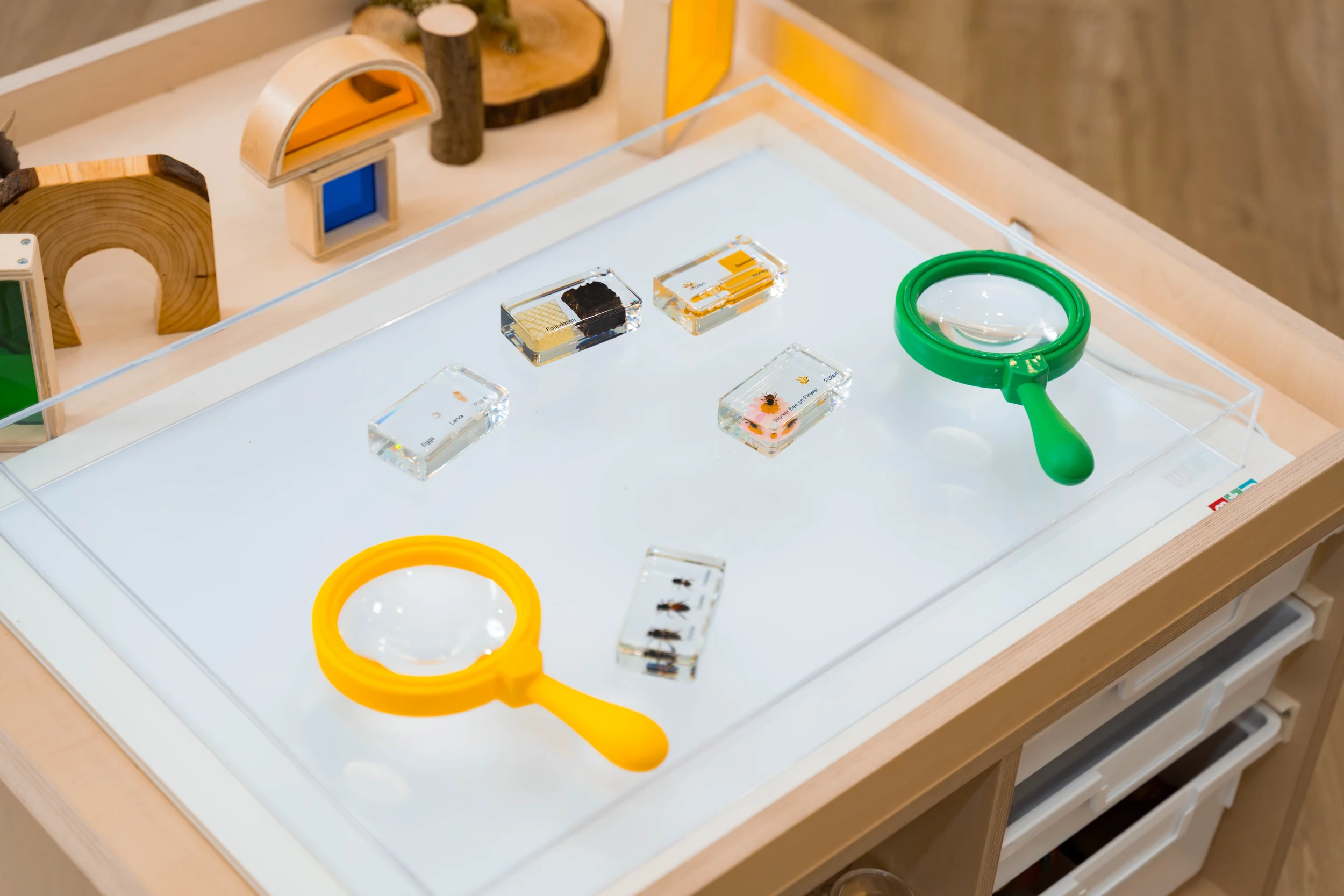
You might tell educators that your child has become interested in insects after finding a caterpillar at home. The educators may build on that interest through books, drawing, observation or outdoor investigation.
An educator might tell you that your child is beginning to speak confidently during small-group play but remains quiet in larger gatherings. Together, you can understand the child more fully than either side could alone.
Kids Central uses the secure OWNA app for private family updates. Its program pages also emphasise regular communication about children’s activities, routines and progress.
Digital updates are useful, but they should not be the only relationship you have with the service. You should know who to speak with when you have a question and feel that important conversations receive enough time.
Beginning Care Is a Transition, Not a Single Drop-Off
Some children settle quickly. Others need time to understand that the new environment is safe and that their family will return.
Neither response tells you whether a child is independent, confident or ready for care.
Orientation visits can help because they allow the centre to become familiar before your child is expected to manage a full day. Educators can begin learning about the child while you are still nearby, and your child can explore without facing every change at once.
A family photo may provide a comforting connection with home. A familiar comfort item, where safe and appropriate, may also help.
Before the first day, tell educators:
How your child responds to unfamiliar adults
What separation has looked like in other settings
Which words you use for routines such as sleep or toileting
What your child finds comforting
What they enjoy talking or playing about
Whether there have been recent family changes
Any fears or sensitivities you have noticed
It is also helpful to talk positively and honestly with your child. You do not need to promise they will never feel sad. You can tell them who will care for them, what may happen during the day and that you will return.
Settling is a relationship-building process. It should not be treated as a test that a child passes or fails on the first morning.
Practical Information for Edensor Park Families
Kids Central Early Learning Centre Edensor Park is located at 79 Swan Road. The centre operates from 7.00 am to 6.00 pm, Monday to Friday, throughout the year except for public holidays.
Its age-based programs include:
A dedicated Transition to School Program
Published fee inclusions include educational programs, five meals, nappies, wipes, bed sheets, linen and sunscreen. Eligible families may also be able to claim the Child Care Subsidy. Current eligibility and claiming information should always be checked directly with Services Australia.
These practical details are important, but they are only one part of the decision. The next step is to understand how the program, environment, and people feel when you see them working together.
A Guide Can Only Take You So Far
You can learn a great deal about early learning before visiting a centre, but some questions are easier to answer in person.
Watch how educators speak with children. Notice whether the rooms feel busy with purpose or simply crowded with resources. Ask how your child’s routines, interests and needs would be understood. Find out how the team communicates when a day has been difficult and when everything has gone smoothly.
You can also read our guide to what parents should look for when comparing childcare in Edensor Park for a more detailed centre-visit checklist.
At Kids Central Early Learning Centre Edensor Park, we welcome families to visit, meet the educators and talk through the questions that matter to them.
You do not need to arrive knowing all the right things to ask. Tell us about your child, what you are hoping for and anything you are unsure about. We will explain how our approach works and give you the time to decide whether it feels right for your family.