
Why Families in Edensor Park Choose Long Day Care Over Babysitting
When parents compare babysitting vs daycare, the conversation can quickly become too simplistic.
One option is described as personal and flexible. The other is described as structured and educational. That makes it sound as though every family must choose one side and reject the other.
I do not see it that way.
A trusted babysitter can be incredibly helpful. They may care for your child at home while you attend an appointment, enjoy an evening out or manage a short-term change in your routine. Your child may already know them well, and the arrangement can feel comfortable and familiar.
Long day care has a different purpose.
It provides regular care within an approved early learning service where qualified educators, planned programs, safety requirements, educator-to-child ratios, group experiences and ongoing family communication work together throughout the day.
For many Edensor Park families, that combination makes long-day care a better fit for regular weekday care. It does not mean babysitting has no value. It means parents are looking for something broader than having a responsible person supervise their child for a few hours.

The First Question Is Not Which Option Is Better
The more useful question is:
What do you need the care arrangement to provide?
You may need someone you trust to stay with your children for an evening. A babysitter could suit that need perfectly.
You may need consistent care several days a week while you work or study. You may also want your child to build relationships with educators, participate in a learning program, spend time with children of a similar age and become familiar with routines outside the home.
That is where long day care begins to offer something different.
I would never tell a family that one type of care is automatically right for every child. Your working hours, budget, support network, child’s age and family preferences all matter.
However, the distinction becomes clearer when we stop comparing only the location or the number of adults present and start looking at what happens across the whole day.
Babysitting Usually Begins With Supervision
A babysitter’s main responsibility is generally to keep a child safe and cared for while the parent is away.
Depending on the arrangement, they may prepare food, play games, read stories, help with a bedtime routine or take the child to an activity. A highly experienced babysitter may bring valuable knowledge and form a lovely relationship with the family.
The arrangement is usually organised directly between the parent and the individual.
That gives families freedom. You can discuss your own hours, expectations, household rules and routines. Your child can remain in familiar surroundings, which may be helpful for evening care or occasional short periods.
The experience can vary considerably, though, because the person’s qualifications, training, approach, and responsibilities depend on whom you hire and what you agree to.
Some babysitters have early childhood qualifications and extensive experience. Others may be family friends, relatives, neighbours or young people taking on one of their first caring roles.
That does not automatically make the care unsafe or unsuitable. It simply means parents carry more responsibility for checking a person’s experience, references, first-aid knowledge, and ability to respond to an emergency.
Long Day Care Combines Care With Early Education
Long day care is designed to support children for extended hours within an education and care setting.
The day includes practical care such as meals, rest, nappy changes, toileting, hygiene and sun protection. It also includes opportunities for play, movement, communication, creativity, social development and investigation.
These parts are not treated as separate jobs.
An educator may support language while helping a toddler wash their hands. They may encourage independence while a preschooler prepares for lunch. They may notice a baby’s attempts to communicate during a feed and respond through facial expressions, words and gestures.
The Australian National Quality Standard recognises this wider responsibility. Approved services are assessed across seven areas: educational programs, children’s health and safety, physical environments, staffing, relationships, family partnerships, and leadership. Parents can explore theNational Quality Standard through ACECQA.
That framework is one of the most important differences in a babysitting vs daycare comparison.
A private babysitting arrangement is based mainly on the agreement between the family and the babysitter. An approved long day care service operates within a formal system of regulation, assessment and ongoing responsibilities.
Your Child Builds Relationships With a Team
Parents sometimes imagine that a childcare centre must feel less personal because there are more children and educators.
A quality centre should not feel anonymous.
Your child should have educators who learn how they communicate, what interests them, what helps them settle and when they may need extra support. Those relationships become stronger through repeated days together.
There is also a team around the child.
If one educator is on leave or finishes for the day, the entire care arrangement does not disappear. Other familiar educators, room leaders and centre management remain available. Information can be shared professionally so that care does not depend on one person remembering everything alone.
That does not remove the importance of consistency. Children benefit from familiar educators and should not face an endless rotation of unfamiliar adults.
What the team structure can provide is continuity beyond one individual.
At Kids Central Edensor Park, Centre Manager Sarah Crossan describes being present on the floor so educators and children feel supported, encouraged and guided. The centre also emphasises individualised attention, qualified educators and strong relationships with families.
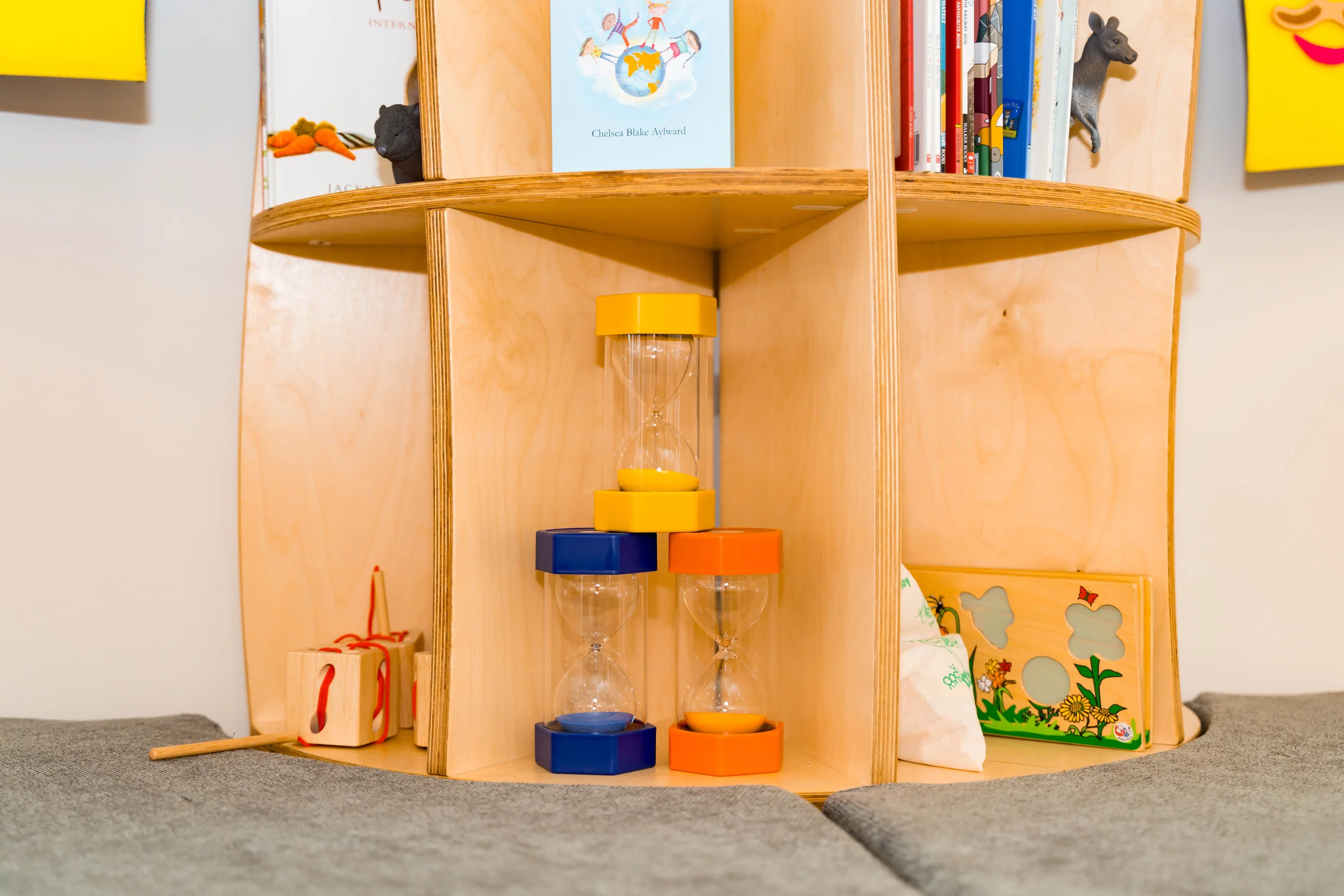
I believe parents should ask who will know their child well, but also who supports those educators. Good care depends on the culture and leadership of the whole service, not just the warmth of one person during a tour.
Qualifications and Ratios Are Not Left to Chance
A kind personality matters in any caring role, but kindness is not the same as professional preparation.
Early childhood educators study areas such as child development, safe practice, learning through play, observation, communication, inclusion and supporting children’s wellbeing. Qualification requirements vary according to the educator’s role, but approved services cannot simply decide that qualifications do not matter.
Educator-to-child ratios also apply.
In New South Wales, centre-based services, the minimum ratios are generally:
One educator for every four children from birth to 24 months
One educator for every five children over 24 months and under 36 months
One educator for every ten children from 36 months to preschool age
Educators must be working directly with children to count towards those ratios. The requirements can be checked through the officialACECQA educator-to-child ratio guidance.
Ratios do not guarantee that every interaction will be perfect. They are minimum requirements, not a complete description of quality.
They do provide a defined staffing foundation that is not normally part of an informal babysitting arrangement.
When visiting a long-day care centre, I would still encourage you to ask how staffing works during the busiest parts of the day. Find out what happens during meals, sleep periods, outdoor play, staff breaks and transitions between rooms.
A number on paper matters. How educators are organised around the children matters too.
Learning Is Planned Around Real Childhood Experiences
Long-day care should not resemble a primary school classroom for babies, toddlers, or preschoolers.
Children learn through relationships, movement, repetition, conversation, sensory experiences and play. A planned early learning program uses those natural ways of learning rather than replacing them with formal lessons too soon.
At Kids Central Edensor Park, the curriculum is based on the Early Years Learning Framework. The centre describes a combination of structured experiences and free play intended to support social, emotional, cognitive and physical development while responding to children’s individual interests and needs.
The educator’s work may not always be obvious to someone watching for a few minutes.
Imagine several children building a long road with timber pieces.
They may be:
Comparing length and position
Negotiating whose idea to follow
Testing whether a structure is stable
Using new language
Recalling roads they have seen in the community
Solving the problem of limited materials
Learning how to enter an existing group
An educator may add signs, vehicles, measuring tools or books. They may ask a question, help resolve a disagreement or document the children’s thinking so the experience can continue another day.
A babysitter can certainly play meaningfully with a child. Many do.
The difference is that long day care places this work within an ongoing educational program. Educators observe development across time, plan experiences, share information with colleagues and connect the child’s interests with broader opportunities for learning.
Children Learn How to Be Part of a Group
Time with other children is not automatically educational simply because several children are in the same room.
Young children need support to participate in a group.
They are learning how to approach someone, communicate an idea, protect their boundaries, wait, negotiate, repair a disagreement and understand that another child may think differently.
These are difficult skills.
A toddler who grabs a toy is not necessarily being deliberately unkind. They may not yet have the language or impulse control needed to manage the situation another way.
A preschooler who refuses to let someone join a game may need help understanding the other child’s perspective and working out how to continue the play.
Educators can observe these moments and offer guidance that suits the children’s ages. They do not need to solve every disagreement immediately, but they should remain available to keep children safe and help them build better strategies.
Regular group experiences can also help children become familiar with:
Listening while another person speaks
Participating in shared routines
Moving between activities
Caring for communal resources
Asking an unfamiliar adult for help
Making choices within a group setting
Managing noise and activity
Forming friendships beyond the family
These experiences are one reason families may choose long-day care before school begins.
The purpose is not to force a shy child to become outgoing or to expect every child to enjoy large groups. It is to give children repeated, supported opportunities to participate in ways that feel manageable for them.
A Routine Can Still Respect the Individual Child
One common reason parents choose babysitting is the belief that care at home will follow the child’s routine more closely.
That may be true, particularly for a baby or for occasional care. A babysitter can often work around the household’s usual meals, sleep times and activities.
Long-day care has shared rhythms because many children need to eat, rest, play, and move through the environment safely.
However, a thoughtful centre should not treat every child as though they have identical needs.
Babies may follow individual feeding and sleep routines. Toddlers may require different settling strategies. Some preschoolers still need sleep, while others need a quiet rest without being expected to fall asleep.
Before a child starts, we want to learn about the routines and signals their family already understands.
How does your child show that they are tired? Which words do you use for toileting? Do they prefer to be held, spoken to quietly or given a little space when upset? Are there family, cultural or religious practices we should understand?
Orientation visits give educators time to begin learning these details before the first full day.
We may also suggest bringing a family photo. That small connection with home can be reassuring, particularly when a child is still learning that their family leaves and returns.
Long-day care includes group routines, but quality care should still leave room for the individual within the group.
The Physical Environment Is Created for Children
Babysitting usually takes place in the family home. That familiarity can be comforting, and the parent already knows how the environment is arranged.
A purpose-built early learning environment offers a range of possibilities.
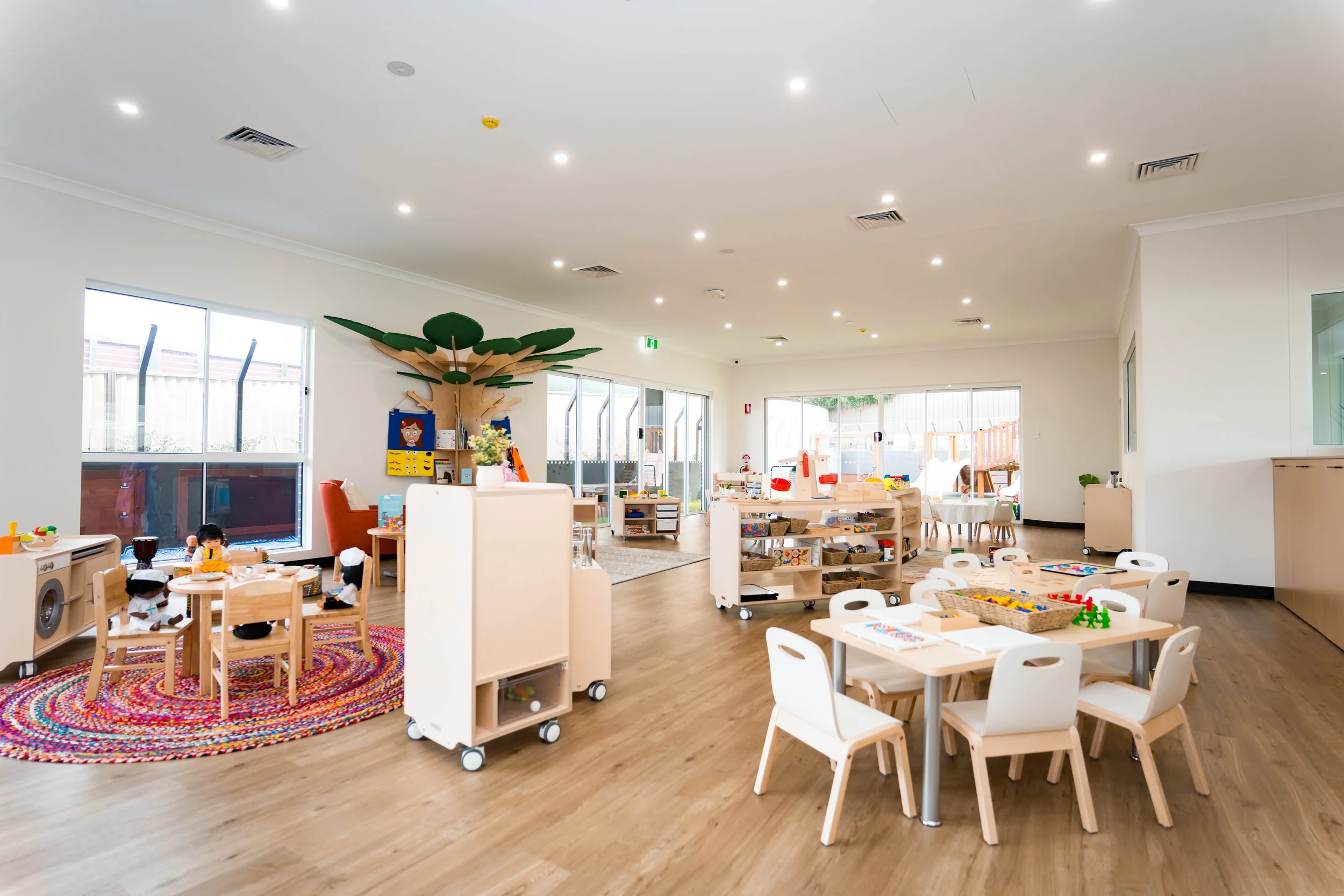
Furniture, resources, bathrooms, sleep areas, security, outdoor spaces and storage can be planned around children of particular ages. Materials can be placed where children can reach them and make choices. Rooms can include spaces for active play, quieter concentration, creativity, sensory experiences and rest.
At Kids Central Edensor Park, the centre describes purpose-built facilities with spacious play areas and age-appropriate resources intended to encourage hands-on exploration and discovery. It also identifies secure entry and regular health and safety checks as part of its approach.
Natural and open-ended resources are particularly valuable because children can use them in more than one way.
A piece of timber may become part of a bridge, shop, enclosure or pattern. Leaves, stones, water, sand and fabric can support sensory exploration, construction, storytelling and investigation.
Outdoor areas should also be planned as learning spaces.
Children need opportunities to run and develop physical strength, but outdoor learning can include gardening, water play, imaginative games, nature observation, building, drawing and quiet conversation.
I would not choose a centre solely because it has the newest equipment. I would ask why the environment has been arranged that way and how children use it during an ordinary week.
Health and Safety Are Shared Across a Service
Every parent wants a babysitter who will protect their child and respond appropriately if something goes wrong.
With informal care, parents usually decide what checks to make and what information to provide. You may ask about first aid, references, driving, emergency contacts, food allergies and household safety.
In long-day care, health and safety responsibilities are built into the service’s wider operating system.
That includes matters such as:
Supervision
Secure collection procedures
Hygiene
Illness
Medication
Allergies
Emergency preparation
Incident documentation
Sleep and rest
Sun protection
Safe equipment and environments
The National Quality Standard specifically assesses children’s health and safety as well as the suitability of the physical environment.
At Kids Central, the published allergy process includes alternative ingredients, allergy charts and forms for staff reference and procedures intended to prevent cross-contamination. The centre also provides sunscreen and other daily care essentials.
No service should suggest that incidents or illnesses can never happen. Children explore, move and interact, and childhood itself involves unpredictability.
What parents should expect is prevention, preparation, supervision, clear procedures and honest communication.
Meals Are Part of the Day, Not an Extra Task
When a babysitter cares for a child at home, the family may prepare meals in advance or ask the babysitter to serve something available in the kitchen.
That can work very well for short care periods.
During long day care, children may eat breakfast, morning tea, lunch, afternoon tea and a later snack away from home. Nutrition, therefore, becomes a substantial part of the service.
Kids Central’s published daily fee inclusions cover five nutritional meals cooked each day by an on-site cook. The service also states that it can provide alternative ingredients for different allergies.
Planned menus help families see what is offered across the week rather than treating each meal as an isolated decision.
Mealtimes also create opportunities for children to:
Practise using cups and utensils
Recognise hunger and fullness
Try unfamiliar foods without pressure
Talk with children and educators
Take growing responsibility for their place
Learn about hygiene and food
Experience dishes that may reflect different families and cultures
A quality centre should still discuss your child as an individual.
Some children have allergies, feeding difficulties, medical needs, cultural requirements or sensory sensitivities. Others need time before they feel comfortable tasting something unfamiliar.
Food should never become a contest between the child and the adults. Families and educators need to share information, remain patient and agree on a safe approach.
Communication Continues While You Are Apart
A private babysitting arrangement can provide very direct communication. You speak with the person caring for your child and may receive messages during the booking or a summary when you return.
Long-term care communication occurs over repeated days and may involve several layers.
You may receive information about:
Meals and bottles
Sleep or rest
Nappy changes and toileting
Activities and interests
Social experiences
Emerging skills
Emotional wellbeing
Incidents or illness
Changes educators have noticed
Kids Central uses the secure OWNA app to communicate privately with parents. The Edensor Park centre also states that it encourages family input, feedback and participation in children’s learning.
Digital updates are useful, but I do not believe an app should replace a relationship.
You should know who to approach if your child has been unusually quiet, is struggling with separation or has experienced a change at home. Educators should also feel able to begin a respectful conversation when they notice something that may need attention.
Communication is not only about reporting what happened. It helps families and educators understand the child together.
Inclusion Is Planned, Not Assumed
A child can be allowed through the door without truly being included.
Meaningful inclusion asks whether the child can participate, form relationships, communicate and experience a sense of belonging.
That may require educators to adjust the environment or the way an experience is offered.
A child may benefit from visual information, a quieter space, different equipment, extra processing time or support from an allied health professional. A family may need information explained in another way or may want to share important language and cultural practices.
Kids Central’s child-safety commitment specifically recognises the cultural safety of Aboriginal children, children from culturally and linguistically diverse backgrounds and children with disabilities. The centre also describes community and family partnerships as part of its approach.
Edensor Park families bring many languages, cultures, routines and family structures into the centre.
I do not believe educators should assume that one approach will work for everyone. We need to listen first.
In a private babysitting arrangement, inclusion depends mainly on the individual’s understanding and the information supplied by the family.
Within a long day care service, inclusive practice can be considered across staffing, resources, programming, communication, physical access and relationships with families and specialists.
Long Day Care Can Support the Move Towards School
Parents sometimes hear “school readiness” and imagine worksheets, alphabet drills or children being expected to sit still for long periods.
That is not the foundation I would prioritise.
Children benefit from early literacy and numeracy experiences, but school readiness also involves communication, confidence, emotional regulation, physical wellbeing, independence and the ability to participate in a group.
A child may be learning to:
Ask for help
Manage a bag and a drink bottle
Listen to instructions
Cope when a preferred activity ends
Join a group experience
Express a disagreement safely
Use the toilet with growing independence
Recognise their belongings
Persist when something is difficult
Build relationships with unfamiliar adults and children
These skills develop over time through daily experiences, not during one school-readiness lesson.
Kids Central offers a dedicated Transition to School Program alongside its nursery, toddler and preschool programs. Its Edensor Park curriculum also links structured and child-led experiences with social, emotional, cognitive and physical development.
A babysitter can support school preparation through reading, games, outings and conversation. The difference is that long-day care allows children to practise many of these skills within a peer group and across a continuing educational program.
The Cost Comparison Is Not Always Straightforward
Families naturally compare the amount charged for each form of care.
Babysitting is commonly arranged at an hourly rate. The cost may depend on the babysitter’s age, experience, qualifications, duties, number of children, travel and the time of day.
Long-day care generally charges a daily fee and may include much more than just hours of supervision.
At Kids Central, published inclusions cover age-based educational programs, the Transition to School Program, five daily meals, nappies, wipes, bed sheets, linen and sunscreen.
Eligible families may also receive Child Care Subsidy when they use an approved service and meet the relevant requirements. Services Australia states that families must use an approved child care service, be responsible for the fees and meet other conditions to receive CCS. A private casual babysitting arrangement will generally not meet that approved-service requirement. Parents should always check their own eligibility through the currentChild Care Subsidy information from Services Australia.
The useful comparison is therefore not simply:
“What is the hourly amount?”
Ask instead:
How many hours of care do we need?
What is included?
Could we be eligible for CCS?
Are meals and daily supplies provided?
Do we need care regularly or occasionally?
Are we paying only for supervision or for an ongoing education and care program?
What happens when the usual carer is sick or unavailable?
The answer may be different for an occasional evening and three regular working days.
Babysitting Can Still Be the Better Choice Sometimes
Long day care is not designed to replace every form of family support.
A babysitter may suit you better when:
You need occasional evening or weekend care
Your child is already asleep for much of the booking
You want care in your own home
You need someone for a short appointment
Your child already has a trusted relationship with the person
You need help outside a centre’s operating hours
You want care for several siblings together at home
Your child is unwell and cannot attend group care, provided the babysitter understands the health risks and requirements
You need temporary help rather than a regular program
Babysitting can also give parents time to rest, maintain relationships, attend events or manage responsibilities that are difficult with young children present.
That is not a lesser purpose.
Children benefit when their parents have reliable support. The important thing is choosing a suitable person and setting clear expectations.
Many Families Use Both
Families do not have to choose a permanent winner in the babysitting vs daycare discussion.
A child may attend long-day care during the working week and spend occasional evenings with a babysitter, grandparent, or family friend.
The two arrangements can meet different needs.
Long day care may provide:
Regular hours
Qualified educators
A planned learning program
Peer relationships
Group routines
Meals and care essentials
Regulated ratios
Ongoing observations and family communication
Transition-to-school support
Babysitting may provide:
Care outside centre hours
Familiarity with the home environment
One-to-one attention
Flexible short bookings
Support for family events or appointments
Care shared between siblings
I think families make better decisions when they stop trying to prove that one form of care is universally superior.
Look at the job you need the arrangement to do.
Questions to Ask Before Making Your Decision
The following questions can help you compare the two options more honestly.
What pattern of care do we need?
Do you need several regular days or a few occasional hours? Is the arrangement connected to work and study, or mostly evenings and appointments?
What relationships do we want our child to build?
Would your child benefit from regular contact with educators and peers? Do they already have a trusted person who can babysit?
What type of learning experience are we looking for?
Do you want an ongoing program based on observations and developmental planning? Are you mainly looking for safe care while your child follows their home routine?
How important is care outside standard weekday hours?
Kids Central Edensor Park operates from 7.00 am to 6.00 pm, Monday to Friday. A babysitter may be necessary for evenings, weekends or other times outside those hours.
What checks have been completed?
For a centre, review its service information, quality rating, policies and staffing. For a babysitter, consider references, experience, first aid, emergency knowledge and any relevant checks.
What will happen when the usual carer is unavailable?
A centre has a broader staffing structure. With babysitting, you may need a backup person if the sitter becomes sick or cannot attend.
How will information be shared?
Decide what updates you need, who you will speak with and how concerns will be handled.
How does the arrangement include our child?
Consider language, culture, disability, medical needs, temperament, sensory preferences and the support your child may require to participate comfortably.
What is the real out-of-pocket cost?
Include fees, CCS eligibility, meals, nappies, transport, supplies and the length of care required.
Why Edensor Park Families May Prefer Long Day Care
Families choose long-day care for many different reasons.
Some need reliable hours for work. Some want their child to spend time with peers before school. Some value having qualified educators available to discuss development, behaviour or settling. Others appreciate meals, daily supplies, age-based programs and communication being organised through one service.
What joins those reasons together is continuity.
The child is not simply being kept occupied until the parent returns. They are becoming part of a community where educators know them, routines become familiar, and learning can develop across days, weeks and years.
At Kids Central Early Learning Centre Edensor Park, we provide nursery, toddler, preschool and transition-to-school programs from our centre at 79 Swan Road. The service operates from 7.00 am to 6.00 pm on weekdays and works with families through regular communication and participation.
You are welcome to visit and look beyond the list of inclusions.
Watch how educators speak with children. Ask how we learn about home routines. See how indoor and outdoor spaces are used. Talk with us about meals, settling in, inclusion, communication, and what your family needs from care.
I do not expect one webpage to make the decision for you.
A good conversation and an honest look through the centre will tell you far more about whether long day care feels right for your child.