
What Makes Edensor Park a Great Place to Raise Young Children
When people ask what makes Edensor Park a place for raising children, I do not think the answer can be reduced to a single playground, a single school, or a single convenient shopping centre.
A suburb becomes part of a child’s life through much smaller experiences.
It is the neighbour who knows their name. It is hearing familiar languages in local shops. It is having somewhere nearby to run, kick a ball or meet another family. It is seeing grandparents, cousins and family friends regularly rather than only on special occasions.
It is also the practical side of parenting. How far do you need to travel for care, school, shopping and activities? Can your child form relationships close to home? Does your family feel represented in the community around you?
Edensor Park will not suit every household in exactly the same way. No suburb does. However, it has several qualities that can make everyday family life feel grounded, connected and familiar.

Children Are a Visible Part of the Community
Edensor Park is not simply a suburb where a small number of families happen to live.
The 2021 Census recorded 10,279 residents, 2,787 families and 541 children aged from birth to four. Couple families with children made up 54.4 per cent of local families, while one-parent families accounted for a further 18.1 per cent.
Those figures do not tell you whether every family has the same experience. They do show that raising children is a substantial part of life in the suburb.
You are likely to see children and families moving through the same local places you use. They are at the shops, in parks, at sporting grounds, attending schools, visiting relatives and participating in cultural or community events.
I think that visibility matters.
Young children benefit from feeling that they belong in public life. They should not always feel as though adult spaces are allowing them to visit temporarily. A family-oriented suburb gives children repeated chances to become familiar with the people and places around them.
Over time, an ordinary trip to the shops can become part of a child’s understanding of their community. They recognise a street, greet someone they have met before or notice another family speaking the same language they hear at home.
That sense of familiarity cannot be manufactured by a single large attraction. It develops through repetition.
Many Cultures Are Part of Everyday Life
One of Edensor Park’s clearest characteristics is its cultural and linguistic diversity.
Only 43.8 per cent of residents recorded Australia as their country of birth in the 2021 Census. Other commonly reported countries included Iraq, Vietnam, Cambodia, Syria and Italy. Assyrian, Italian, Vietnamese, Australian and Chinese were among the leading ancestries reported.
The language figures are even more revealing.
A non-English language was used in 77.1 per cent of households. Languages spoken at home included Assyrian Neo-Aramaic, Vietnamese, Arabic, Chaldean Neo-Aramaic and Croatian. Families can explore the full local profile through the official Australian Bureau of Statistics Edensor Park Census data.
For a young child, that diversity is not an abstract demographic fact. It may be part of the sound and rhythm of daily life.
A child may speak one language with a grandparent, another with an educator and hear several more while shopping or playing. They may see different foods, celebrations, places of worship, family traditions and ways of communicating.
I would never suggest that every multicultural community automatically understands every family well. Respect still requires effort. Misunderstandings can occur anywhere.
What diversity offers is a broader starting point.
Children may grow up recognising that families do not all look, speak, eat, celebrate or organise their lives in the same way. Difference is not something introduced during a special activity once a year. It is already around them.
Home Language Does Not Need to Be Left at the Door
Parents sometimes worry that speaking a language other than English at home will make early learning or school more difficult.
Families should not feel pressured to weaken an important relationship with their child by using a language in which they cannot communicate as naturally, warmly or fully.
Your home language carries far more than vocabulary. It carries humour, family stories, affection, instructions, traditions and connections between generations.
A quality early learning service should be interested in the words your child already uses. Educators may ask how your child says important things such as water, toilet, sleep, Mum, Dad or help. Even a small amount of familiar language can reassure a child who is entering a new environment.
Resources should also reflect the families who attend.
That can include:
Books showing different cultures and family structures
Music and stories shared by families
Labels or greetings in home languages
Dolls and dramatic-play materials representing different people
Family photographs
Cultural knowledge contributed by parents and grandparents
Respect for dietary, religious and family practices
Inclusion is not achieved by displaying several flags while expecting every child to communicate and participate in the same way.
It begins by listening.
At Kids Central, we want families to tell us what matters at home. You know which words comfort your child, which people are important to them and which routines carry meaning within your family.
Family Networks Can Become Part of a Child’s Week
Not every family in Edensor Park has relatives nearby, and we should not assume that all culturally diverse households are large or closely connected.
However, for many families, grandparents, aunts, uncles, cousins and trusted family friends play an active role in raising children.
That may mean a grandparent collects a child from care. Cousins may attend the same school or play in the same local competition. Families may gather regularly for meals, faith, celebrations or practical support.
These relationships can give children a strong sense of continuity.
They learn that care can come from more than one trusted person. They hear family stories from different generations. They develop relationships with people of different ages and begin to understand their place within a wider family history.
Parents may also benefit from having support nearby.
Raising a young child can be demanding even when everything is going well. A family member who can help with collection, prepare a meal, attend an appointment, or simply listen can make a meaningful difference.
That support is not available to everyone, and families without nearby relatives should never be made to feel that they are missing the only valid form of community.
Friendships, educators, neighbours and community groups can also become a trusted network. The important thing is having relationships you can rely on rather than feeling that every part of parenting must be handled alone.
Local Open Spaces Make Ordinary Play Possible
Young children do not need every outing to be expensive, highly organised or far from home.
They need opportunities to move, explore, notice nature and use their imagination.
Edensor Park includes local recreation areas such as Angle Vale Reserve, Allambie Reserve and Bosnjak Park. The suburb is also home to sporting activities through facilities and clubs, including Sydney United Sports Centre and junior rugby league at Bosnjak Park.
The value of local outdoor space is not only in formal sport.
For a young child, a park visit might involve:
Running across open grass
Climbing and balancing
Collecting leaves
Watching insects
Feeling wind or changes in temperature
Drawing in dirt
Following a path
Inventing a game with another child
Learning when to stop and look for a car
Sharing public space with other families
These experiences support movement, confidence, observation and independence.
They can also help parents.
There are days when a large excursion is unrealistic. You may have limited time before dinner, a baby who needs to sleep soon or a child who simply needs to move after being indoors.
Having somewhere local to go can turn an unsettled afternoon into a manageable one.
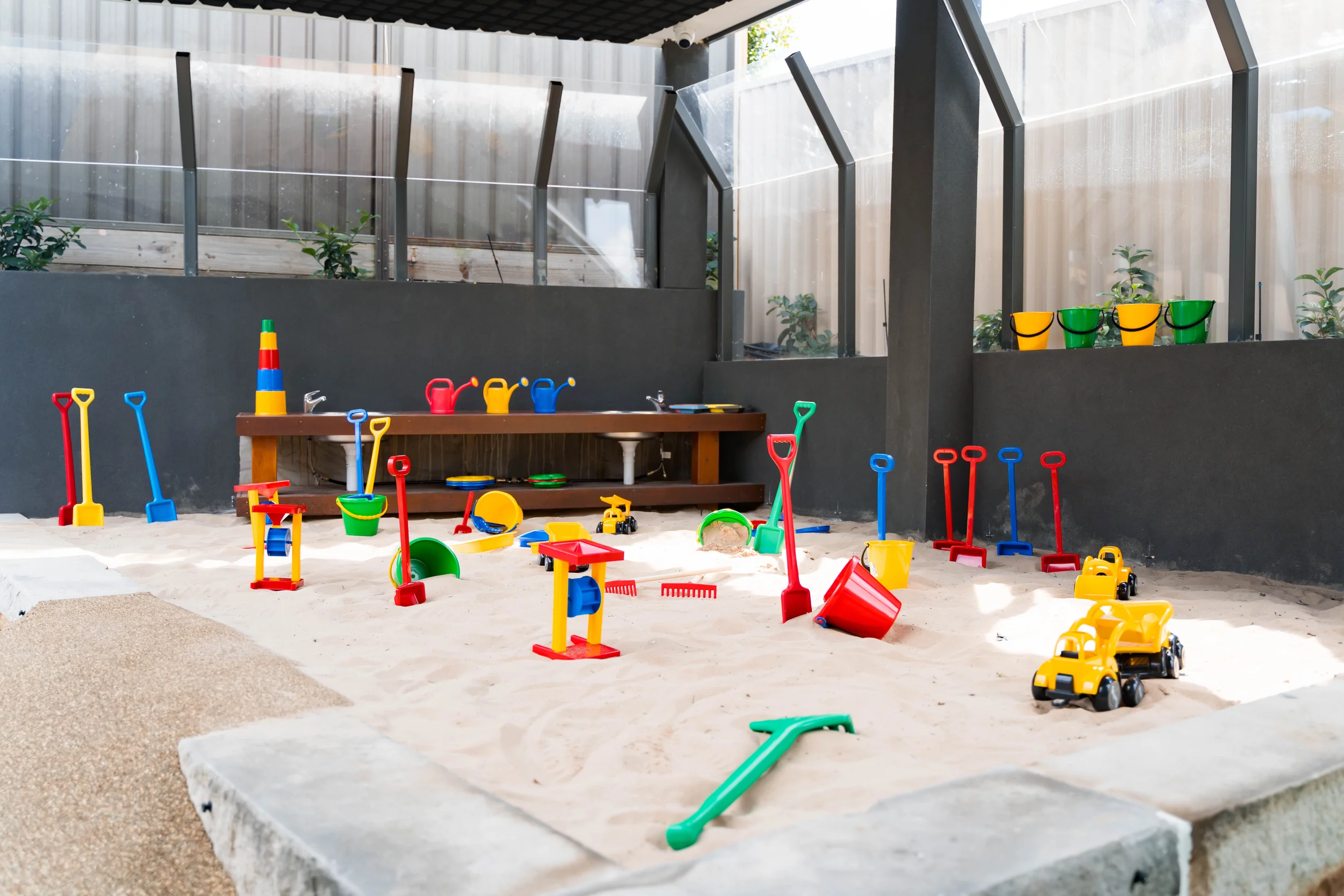
Sport Offers More Than Physical Activity
Children do not need to join organised sport at a very young age to benefit from seeing physical activity as a normal part of community life.
Local football, rugby league and other recreational activities can give families somewhere to gather and children something to become curious about. They may begin by watching an older sibling, kicking a ball near the sideline or copying what they see at home.
When children are ready for organised activities, sport can support:
Balance and coordination
Listening to instructions
Participating in a group
Coping when something does not go their way
Taking turns
Practising a developing skill
Encouraging someone else
Becoming familiar with adults outside the family
Not every child enjoys competition, and that is perfectly reasonable.
Some children prefer dancing, walking, climbing, imaginative outdoor play or individual physical challenges. A community should leave room for different ways of being active rather than treating team sport as the only meaningful option.
The larger point is that movement can be part of family life without requiring a trip across Sydney every time.
Children Can Grow Through Familiar Places
Adults can underestimate how much children learn from returning to the same place.
The first visit to a park may be mainly about staying close to a parent. A later visit may involve exploring the equipment. Eventually, the child may recognise another family, remember where something is located or suggest their own plan for play.
The place has not changed, but the child has.
Repeated local experiences give children a chance to notice their own growth.
They may finally climb something that once felt too difficult. They may move further from a parent while still checking back. They may begin a conversation with another child or remember how to travel safely through a familiar car park.
This is one reason I do not believe childhood needs to be filled with constant novelty.
New experiences matter, but familiarity has value too. It allows children to feel capable.
Everyday Services Are Close to Family Life
Edensor Park is primarily residential and has a local shopping centre with a supermarket, other stores and food businesses. The suburb also has local primary schools and community and recreation spaces.
These may sound like ordinary features, and that is exactly why they matter.
Family life is made up of ordinary needs:
Buying groceries after collection
Picking up something a child needs for the next day
Finding a simple meal when the day has run late
Attending school or care
Visiting a park without planning the entire weekend
Meeting another parent locally
Managing several family responsibilities in one trip
A family-friendly suburb is not only one that offers impressive destinations. It is one where ordinary responsibilities can fit together reasonably well.
Convenience does not remove the pressure of parenting, but it can prevent small tasks from becoming unnecessarily difficult.
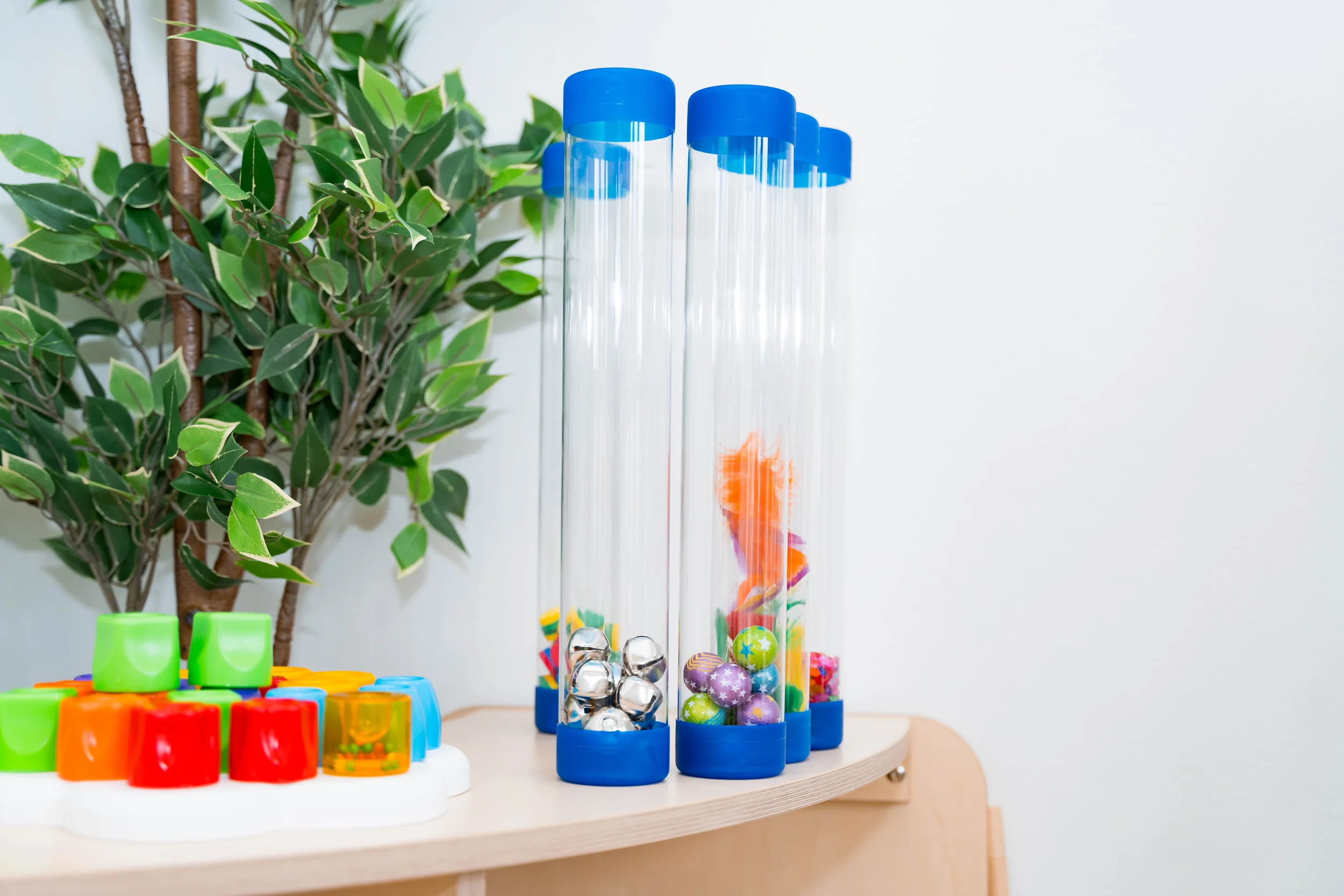
There Is a Local Path Towards School
Edensor Park is served by local primary schools, including Edensor Park Public School and Governor Philip King Public School. Families should always confirm their own enrolment area because school boundaries and individual circumstances can change. The official NSW Public School Finder allows parents to search by their residential address.
Having schools in or near the local community can help children build continuity.
A child may see older siblings or local children wearing a school uniform. They may pass a school during regular journeys. Friends from early learning may later begin Kindergarten in the same area.
That familiarity does not remove every first-day feeling. School is still a major transition.
It can, however, help the idea of school become part of the child’s known world rather than something entirely separate from their home and community.
Good preparation should build on that familiarity.
It can include:
Talking about what school days involve
Practising opening a lunchbox
Caring for a bag and a drink bottle
Asking an unfamiliar adult for help
Participating in group experiences
Managing toileting with growing independence
Coping when a preferred activity ends
Listening while another person is speaking
Becoming comfortable with short separations
These are not skills children need to perfect before they are allowed to start school. They are areas that can be supported gradually.
Our guide to early learning in Edensor Park explains how those foundations develop from infancy through the preschool years.
Raising Children Here Still Requires Practical Planning
I want to be honest about the fact that a family-oriented suburb is not automatically convenient for every family.
Edensor Park is a largely residential area where driving is a significant part of many household routines. The Census recorded an average of 2.2 vehicles per dwelling. More than two-thirds of occupied households reported having at least two vehicles.
That does not mean every household drives everywhere or that public transport is unavailable. It does mean you should map your actual week rather than judging the suburb from a postcode.
Consider:
Where each parent or carer works
How long morning and afternoon travel may take
Who can collect your child if plans change
Whether school, care and activities are in compatible directions
How your family manages with one vehicle
Which services are comfortably walkable from your home
What traffic is like at the times you will travel
Whether an older relative can manage the collection route
What happens when a usual driver is unavailable
A place can have many family strengths and still create a difficult routine for a particular household.
The best decision is the one based on your real life.
A Family Home Is More Than Its Number of Bedrooms
Most occupied dwellings in Edensor Park were separate houses at the 2021 Census, and more than half had four or more bedrooms. The suburb also recorded an average household size of 3.4 people.
Space can help families, particularly when children need room to play, relatives visit regularly, or several generations share a home.
However, the size of a house does not determine the quality of a childhood.
Children can thrive in different types of homes when they have secure relationships, opportunities to play and adults who listen to them.
A larger home can still feel stressful if family members are isolated from one another. A smaller home can feel deeply secure when it supports closeness, routine and belonging.
I would encourage parents to consider how a home and its neighbourhood work together.
Is there somewhere nearby for active play? Can your child spend time with other people? Do you feel connected to the community or confined to the house? Can the daily routine be managed without constant pressure?
The answers matter more than floor area alone.
A Child Should Feel Their Family Belongs
A child’s sense of identity develops partly through what the adults around them value.
When children hear their names pronounced correctly, see their family represented respectfully and notice that their language or culture is welcomed, they receive an important message:
You do not need to hide part of yourself to belong here.
Edensor Park’s diversity creates strong opportunities for that message, but centres, schools and community organisations still need to act thoughtfully.
They should not expect one family to speak for an entire culture. They should not turn a tradition into a costume or food activity without understanding its meaning. They should ask families what they would like to share and respect those who prefer not to take on an educational role.
At Kids Central, inclusion includes the cultural safety of Aboriginal children, children from culturally and linguistically diverse backgrounds and children with disabilities. Our public child-safety commitment also states that children’s voices should be heard in decisions that affect them.
For me, belonging means more than being welcomed on enrolment day.
It means the child and family continue to be listened to.
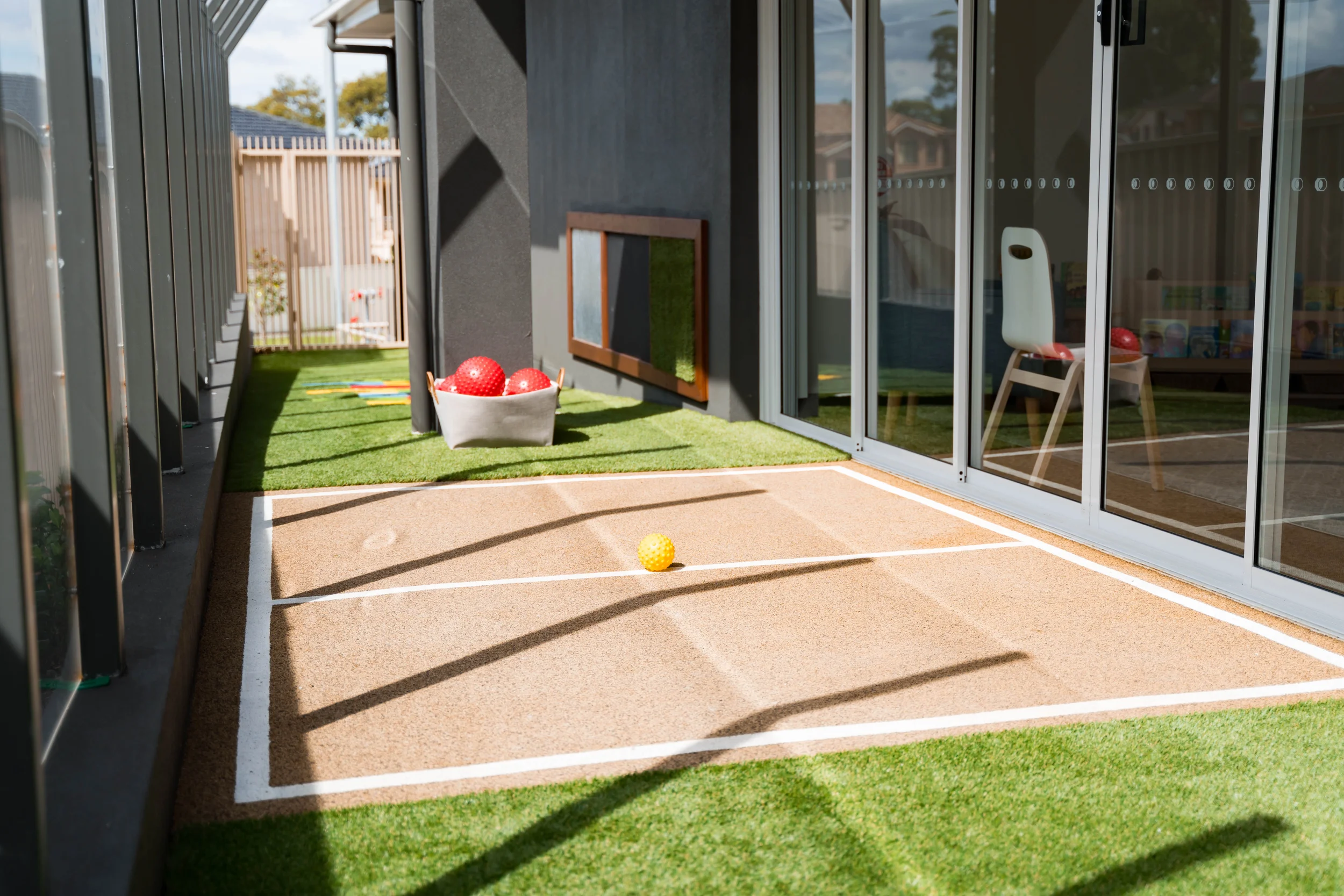
Early Learning Can Connect Home With the Wider Community
A childcare centre is one of the first places where a young child may begin developing relationships outside their family.
That can feel exciting and emotional at the same time.
Your child may be learning to trust another adult, eat alongside other children, rest in a different environment or communicate with people who do not immediately understand every sound and gesture.
These are significant experiences.
Quality early learning should not ask a child to leave home life behind. Educators should learn about the family and use that knowledge to create continuity.
That can involve:
Orientation visits before the first full day
Learning the child’s routines and comfort strategies
Using a family photo
Asking about home languages
Understanding cultural and dietary needs
Including family interests in the learning program
Communicating about changes at home
Inviting family feedback
Building relationships with the surrounding community
At Kids Central Edensor Park, our approach includes qualified educators, individualised learning, purpose-built facilities, secure entry, family communication and indoor and outdoor areas designed for exploration. The centre operates from 7.00 am to 6.00 pm on weekdays at 79 Swan Road.
Our Edensor Park early learning centre supports children through nursery, toddler, preschool and transition-to-school programs.
Well-Planned Spaces Help Children Use Their Environment
Children experience a space differently from adults.
An adult may notice attractive furniture and a clean room. A child may notice whether they can reach the resources, find somewhere quiet or understand what they are allowed to do.
We use natural and open-ended resources because they allow children to bring their own ideas.
A piece of timber does not need to remain a specific toy. It can become a bridge, a telephone, a cooking utensil or a part of a building. Leaves, sand, water, stones and fabric can support sorting, storytelling, sensory exploration and construction.
Indoor and outdoor areas should provide different kinds of experiences.
Children need room for:
Active movement
Quiet concentration
Messy investigation
Creative expression
Group play
Time alone
Rest
Safe physical challenge
Contact with natural materials
Conversations with educators
The purpose is not to keep children busy every minute.
It is to give them an environment in which their curiosity has somewhere to go.
Meals Can Reflect Care and Community
Food is another important part of how children experience place and belonging.
A planned childcare menu needs to support nutrition and safety, but meals are also social experiences. Children sit with others, practise independence, encounter new tastes, and talk about food they know from home.
At Kids Central, five nutritional meals are prepared each day by an on-site cook. Our allergy procedures include alternative ingredients, allergy information for staff and controls intended to reduce cross-contamination.
Families should be able to discuss:
Allergies
Medical dietary requirements
Religious food practices
Cultural preferences
Feeding development
Sensory responses
Foods a child is learning to accept
I do not think children should be judged because the food they are familiar with is different from what another family eats.
Meals can be a place where children discover differences without being made to feel different.
What I Would Consider Before Raising a Child in Edensor Park
A list of suburb features can help, but your decision should return to your own child and routine.
I would ask:
Does the suburb support our real working week?
Map care, school, work, shopping and family support at the times you will actually travel.
Do we have people nearby?
Think about relatives, friends, neighbours, educators and community relationships. Support does not need to come from one source.
Will our family feel understood?
Consider language, culture, disability, religion, family structure and whether local services listen respectfully.
Is there enough variety in how our child can spend time?
Look for opportunities involving outdoor movement, quieter play, community activities, sport, nature and social relationships.
What will the transition to school look like?
Check school catchments, preschool options and how your child can gradually become familiar with school routines.
Can we access high-quality early learning?
Visit centres rather than relying only on websites. Watch educator interactions and ask how the service approaches safety, communication, inclusion, nutrition and settling.
Our guide to finding the best childcare in Edensor Park provides a more detailed list of questions to use during a centre tour.
What does our child need from the environment?
A highly social child and a child who becomes overwhelmed in groups may use the same community very differently. Think about where your child feels comfortable and where they may need support.
No Suburb Raises a Child on Its Own
Edensor Park has many qualities that can support young families.
Children are a visible part of the population. Multiple cultures and languages shape local life. Families have access to schools, recreation, sport, shopping and early learning within the surrounding area.
Those things create possibilities.
They do not replace patient parenting, secure relationships, safe services or a community willing to include different children.
What makes a place good for raising children is how its people and resources come together in everyday life.
It is whether your child can be known.
It is whether your family feels able to participate without hiding what matters to you.
It is whether there are trusted adults beyond the home and spaces where children can move, explore and form relationships.
At Kids Central Early Learning Centre Edensor Park, we want to contribute to that wider sense of community.
You are welcome to visit the centre, meet our educators and talk with us about your child. We can show you how our indoor and outdoor environments are used, explain our programs and listen to what your family needs from early learning.
A suburb becomes meaningful through the relationships you build within it. We would be honoured to become part of your family's relationships.