
How to Choose the Best Early Learning Centre in Western Sydney
The word “best” can make choosing early learning harder than it needs to be.
It suggests that somewhere in Western Sydney, there is one centre at the top of an invisible list, and that every parent should somehow be able to identify it.
I do not believe early learning works that way.
A centre may be a wonderful choice for one child and a poor fit for another. One family may need long weekday hours and care during school holidays. Another may prioritise a smaller environment, support for a disability, communication in a home language or a gradual approach to separation.
The best early learning centre in Western Sydney is not simply the one with the newest building, the largest playground or the longest list of activities.
It is the centre that can safely meet your child’s needs, work within your family’s real routine and build relationships that give both you and your child confidence.
That choice deserves more than a quick tour and a comparison of fees.
This guide will help you define what “best” means for your family, explore your options, and notice the aspects of early learning that are not always visible in a brochure.

Decide What the Centre Must Do Before You Decide What It Should Look Like
Parents often begin by searching centre websites and looking at photographs.
I would begin somewhere else.
Write down the job you need early learning to do.
Your list may include:
Care on particular weekdays
Opening hours that cover work or study
A location that fits school and employment travel
A nursery for a baby
A preschool program for an older child
Meals and daily care items
Support for an allergy or medical condition
Experience with disability or additional needs
A gradual orientation process
Respect for home language, culture or religion
Access to outdoor learning
Reliable communication
Preparation for Kindergarten
Now separate the list into three groups:
The centre must provide this
These are requirements without which the arrangement cannot work safely or practically.
They may include the correct days, suitable hours, allergy management, physical access or the ability to follow a medical plan.
This would make family life easier
These may include meals, nappies, a single location for siblings, or a shorter trip from home.
This would be nice, but it is not essential
These are features you may appreciate but would not choose over safety, relationships, or essential support needs.
This exercise protects you from being distracted by impressive extras.
A large play area will not solve an unmanageable collection time. A highly advertised school-readiness program will not compensate for educators who do not communicate respectfully with your child.
Test the Practical Fit Before Becoming Emotionally Attached
A centre can feel perfect during a weekend open day and become extremely difficult to use on a working Wednesday.
The NSW Department of Education recommends considering the service type, required days and hours, location, quality rating, cultural inclusion and any healthcare needs when choosing early education and care. It also advises parents to ask about fees, additional charges, meals, unsettled children, family involvement and transitions between rooms or into school. (education.nsw.gov.au)
Before adding a centre to your final shortlist, travel the route at the time you would actually use it.
Ask yourself:
How long does the morning journey take in traffic?
Is parking practical when several families arrive together?
Can a grandparent or backup carer manage the route?
Does collection fit the end of the working day?
Will another child need to be collected from school first?
What happens when one vehicle is unavailable?
Are the required days genuinely available?
Does the centre operate during the weeks your family needs care?
A slightly longer journey may be worthwhile when the centre suits your child particularly well.
A long and unpredictable journey may also place avoidable pressure on every morning and afternoon.
You need to make that judgement using your own routine.
Use Official Information to Remove Unsuitable Options
Once you know what your family needs, use official information to create a manageable shortlist.
TheStartingBlocks childcare finder allows families to search for approved services and view available information, such as quality ratings. The NSW Government also directs families to StartingBlocks when looking for long day care services with preschool programs.
TheNational Quality Standard is the national benchmark used to assess approved early childhood education and care services.
It covers seven areas:
Educational program and practice
Children’s health and safety
Physical environment
Staffing arrangements
Relationships with children
Partnerships with families and communities
Governance and leadership
Services receive a rating for each area and an overall rating.
A rating is useful, but it is not a complete answer.
It can help you identify questions and compare published information. It cannot tell you everything about the educators currently working in your child’s room, a recent leadership change or how your child will respond to the environment.
Use the official record as due diligence.
Then visit.
Do Not Ask Only Whether the Centre Is Good
Ask whether it is good for your child.
That may sound obvious, but many centre tours remain general. Parents hear about the program, rooms and inclusions without discussing how their own child experiences unfamiliar people, groups, noise, meals or separation.
Bring the real child into the conversation.
You might say:
“My child watches for a long time before joining.”
“She speaks confidently at home but becomes quiet around unfamiliar adults.”
“He finds sudden transitions difficult.”
“She needs more time to process a question.”
“He has a lot of physical energy and struggles when movement is restricted.”
“She is still developing confidence with toileting.”
These details give the centre something meaningful to respond to.
Listen carefully to the answer.
Does the team describe ways it might support your child?
Or does it mainly explain what every child is expected to do?
The difference matters.
Ask the Centre to Describe a Difficult Day
Centres naturally show parents their strengths.
I would also ask what happens when the day is not going smoothly.
Try questions such as:
What happens when a child remains upset after drop-off?
How do educators respond when two children repeatedly conflict?
What happens if my child refuses every meal?
How is a toileting accident handled?
When would you call me during the day?
What happens if an educator notices a developmental concern?
How do you respond when a parent disagrees with something?
What happens when regular staff members are absent?
You are not trying to catch anyone out.
You are finding out whether the service can speak honestly about normal difficulties.
Children cry, become frustrated, reject food, struggle with transitions and need help with other people. Parents and educators may misunderstand one another. Staff members become unwell.
A trustworthy centre does not need to promise that these things will never happen.
It should explain how the team responds.
Follow Five Moments From a Real Childcare Day
Instead of trying to assess everything at once, imagine five ordinary moments.
1. Arrival
Your child enters after a poor night’s sleep and does not want you to leave.
Who notices?
Does an educator greet your child by name? Is there time for you to mention the difficult night? Does the handover feel supported, or are you expected to leave without anyone making a connection?
The first few minutes can affect how secure the day feels.
2. Play
Your child becomes interested in something that was not part of the planned activity.
Can they continue exploring it?
Does an educator listen, add a resource or ask a useful question? Is there room for children’s ideas, or does every experience move towards an adult-selected result?
3. A care routine
Your child needs help with toileting, becomes distressed during a nappy change or refuses lunch.
How is their dignity protected?
Care routines reveal a great deal about how a centre thinks about children. They should not be treated as interruptions between more important learning activities.
4. A transition
The group needs to move inside, prepare for rest or pack away.
What happens to a child who is deeply involved in play or needs more warning?
Transitions are part of everyday. The best early learning centres do not expect every child to cope with them in exactly the same way.
5. Collection
You arrive at the end of the day.
Can someone tell you more than how much your child ate and slept?
Do educators know what drew their interest, whether something was difficult or what they may want to continue tomorrow?
These five moments reveal relationships, communication, planning, and respect more clearly than a feature list.
Notice Whether Educators Speak With Children or Mainly at Them
During a tour, watch the interactions that are not being staged for you.
Do educators:
Use children’s names?
Come closer rather than calling across the room?
Wait for answers?
Notice gestures and facial expressions?
Explain boundaries?
Help children enter play?
Remain calm during strong emotions?
Show interest in children’s ideas?
Offer help without immediately taking control?
The National Quality Standard states that relationships with children should be responsive and respectful and should support security and belonging. It also links qualified and experienced educators with predictable environments, warm relationships and active participation in learning.
You do not need to see a silent room or perfectly cooperative children.
A lively early learning environment may include noise, movement, disagreement and mess.
You are looking for adults who remain attentive and respectful within that reality.
Find Out Who Will Actually Know Your Child
A tour may be led by a centre manager, enrolment coordinator or room leader.
Ask who will spend regular time with your child.
You may want to know:
Who leads the room?
Which educators are usually present?
Who plans the educational program?
How long has the team worked together?
Who will receive your child during morning drop-off?
What happens when a regular educator is absent?
How are casual educators introduced?
How involved is management in the rooms?
Who should you speak with about development or wellbeing?
Familiarity matters.
A child does not need to rely on only one adult, but they should have a group of people who recognise their communication, routines and interests.
Leadership matters too.
At Kids Central Edensor Park, Centre Manager Sarah Crossan describes remaining present on the floor so educators and children feel supported, encouraged and guided. The centre also presents family partnerships, qualified educators and individualised attention as central to its approach.
The way leaders support educators will eventually affect children and families.
Check Qualifications, Then Keep Asking
Qualifications provide an important professional foundation.
Early childhood educators study areas such as child development, learning through play, health and safety, observation, inclusion and family communication.
Ask:
What qualifications do the room educators hold?
Who is the early childhood teacher?
Is anyone working towards a qualification?
How does the centre support professional development?
What training covers first aid, child safety and allergies?
How do educators share knowledge across the team?
Do not treat the answer as a box to tick.
Professional knowledge matters because everyday situations require judgement.
An educator may need to decide whether a child needs help entering play, more time to attempt a task, a quieter environment or a conversation with the family.
Qualifications are valuable when that knowledge is used with patience and care.
Understand Ratios Without Stopping at the Number
The National Quality Framework sets minimum educator-to-child ratios.
For centre-based services in New South Wales, the minimum ratios are generally:
One educator for every four children from birth to 24 months
One educator for every five children over 24 months and under 36 months
One educator for every ten children from 36 months through preschool age
Educators must be physically present and directly involved in education and care to be counted. Ratios are calculated across the service, while adequate supervision must still be maintained. Families can check the current requirements throughACECQA’s educator-to-child ratio guidance.
Now ask how those requirements work during a real day.
What happens during:
Educator breaks
Nappy changes
Toileting
Meals
Rest
Outdoor play
Staff illness
An incident involving one child
Times when several children need emotional support?
Children do not experience ratios as numbers.
They experience whether an adult is available.
Look for a Centre That Can Explain Its Program Through Children
Many centres use the same language:
Play-based
Child-led
Holistic
Individualised
School-ready
Ask for an example instead.
You might say:
“Can you tell me about something the children became interested in and what happened next?”
A useful answer may describe children noticing worms in the garden.
The educators might have added books, drawing materials, magnifying tools and conversations about soil. Families may have shared garden photographs. The children may have revisited their ideas across several days.
That example shows how observation becomes planning.
Play-based learning does not mean leaving children to occupy themselves without purpose.
Educators may extend learning by:
Adding resources
Introducing language
Asking questions
Helping children recall earlier ideas
Supporting collaboration
Adapting an experience
Recording observations
Planning a next step
Kids Central states that its philosophy values play-based learning, hands-on experiences, curiosity, creativity, problem-solving and holistic development. It also describes children as unique individuals whose culture, background and abilities should be respected.
A strong program should be able to show those ideas in everyday practice.
The Environment Should Respond to Children
A new or beautifully designed centre can make a strong first impression.
Look beyond the finishes.
Ask what children can actually do in the space.
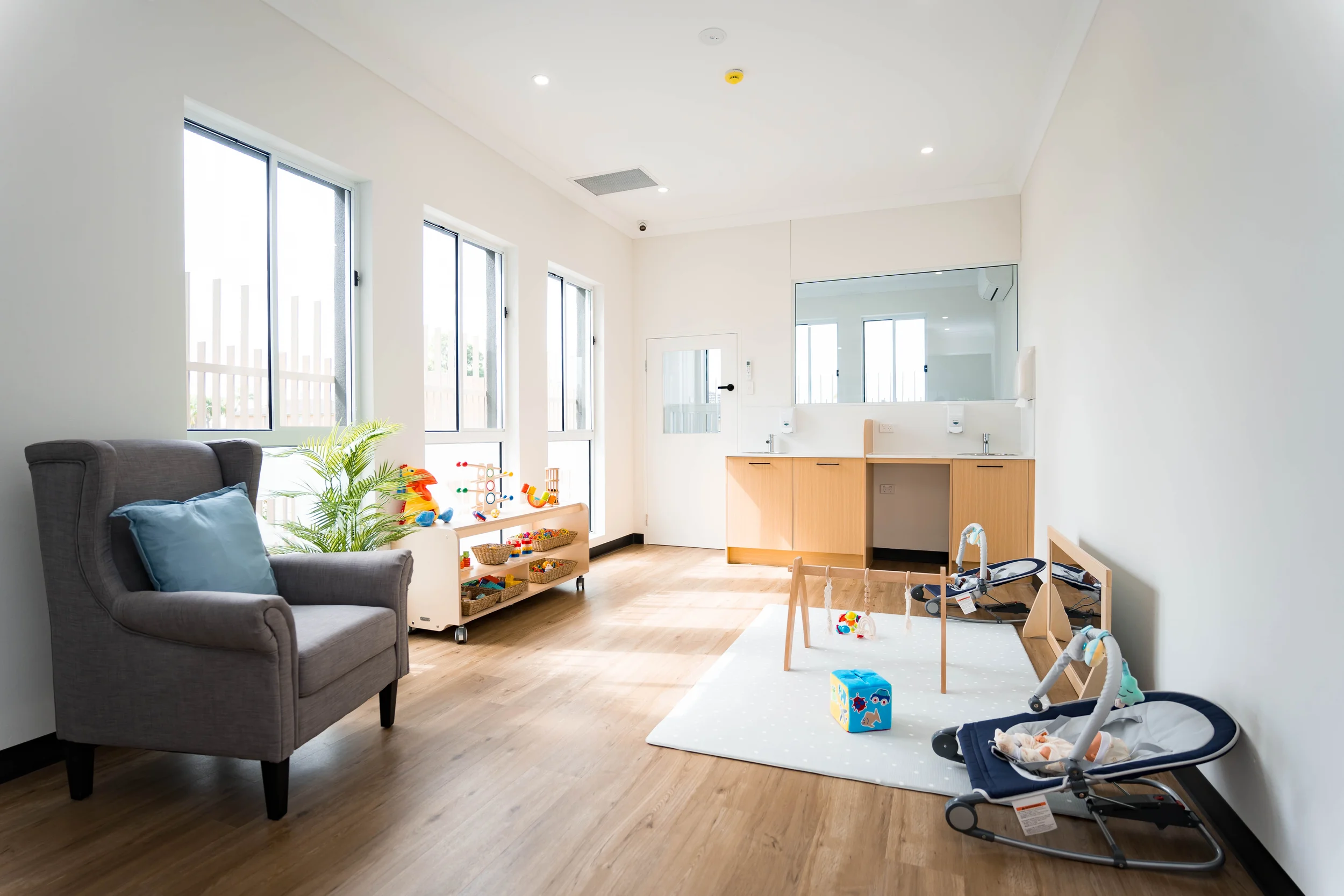
Can they reach resources? Are there places for active movement and quieter concentration? Can children choose materials, or does an adult distribute everything?
A thoughtful indoor environment may support:
Construction
Books and storytelling
Imaginative play
Creative work
Sensory exploration
Music
Small-group activity
Rest
Quiet observation
Independent choices
The physical environment forms one of the seven National Quality Standard areas. ACECQA describes a quality environment as safe and suitable, and as offering rich and diverse experiences that support learning and development.
The room should not require every child to participate in the same way.
A child who thrives in busy group play, and a child who needs a quieter entry point, should both be able to belong.
Natural Resources Should Leave Room for the Child’s Idea
Natural and open-ended resources may include timber, stones, leaves, shells, water, sand, fabric and recycled materials.
Their value is not simply that they look attractive.
They can be used in many ways.
A timber piece might become a bridge, part of a shop, a road, a telephone or an object within a story.
A group of stones might be sorted, counted, balanced, transported or used during imaginative cooking.
The child decides more of what the material becomes.
Kids Central has identified natural resources and carefully planned indoor and outdoor spaces as important parts of its intended approach.
During a tour, ask whether children use these resources regularly.
A shelf can look impressive without the materials ever becoming part of genuine play.
Outdoor Learning Should Be More Than a Scheduled Break
A large playground does not automatically make a centre better.
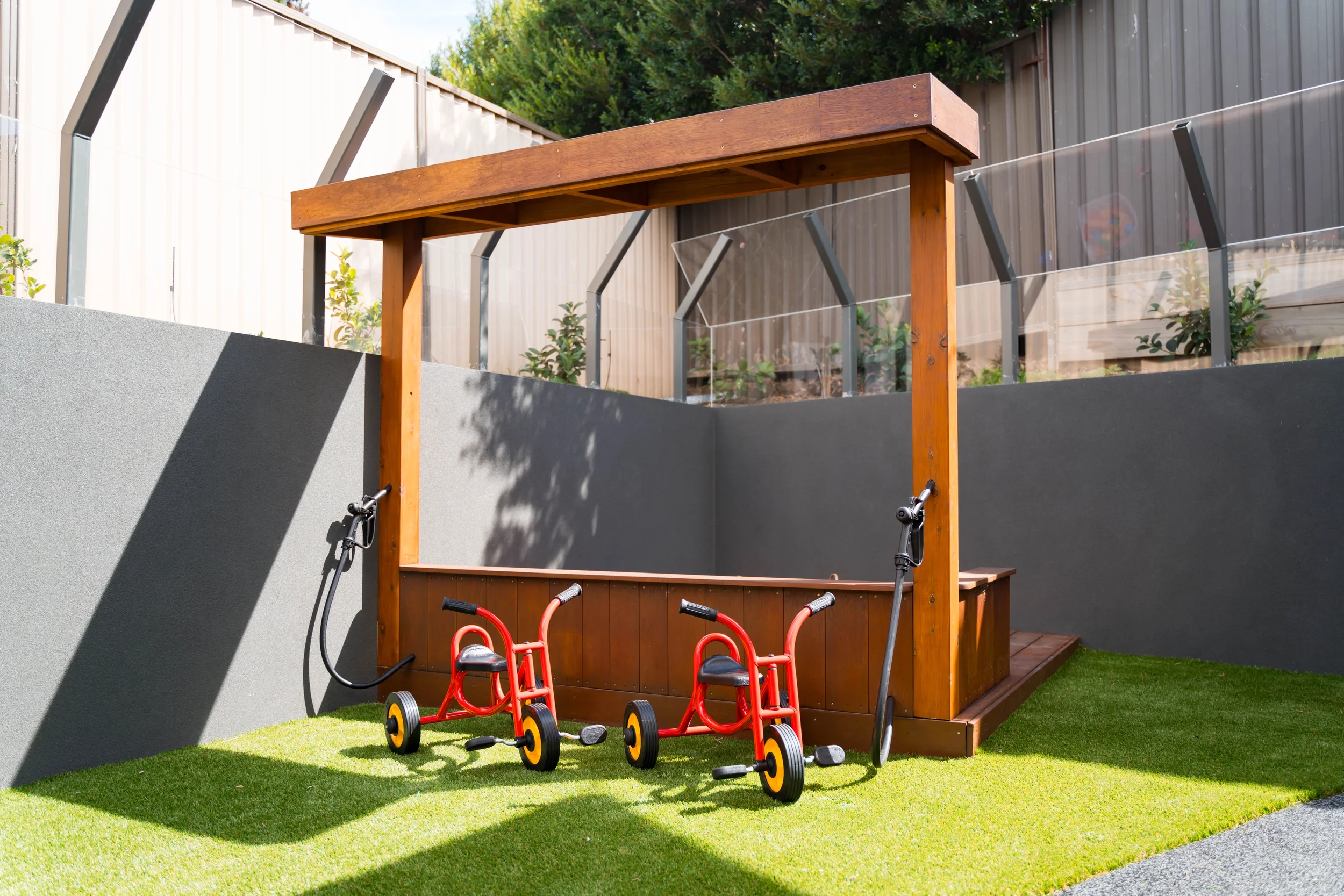
Ask how the outdoor environment is used.
Children can learn outdoors through:
Running and climbing
Water and sand
Gardening
Construction
Nature observation
Drawing
Dramatic play
Safe physical challenge
Cooperative games
Quiet conversation
You might ask:
How frequently do children go outside?
Can they move between indoor and outdoor spaces?
What happens during hot, cold or wet weather?
Is there shade?
Are babies given safe outdoor experiences?
Are there quieter outdoor areas?
Can children use loose and natural materials?
How does the centre assess physical risk?
Outdoor learning should support movement and health, but it can also support language, problem-solving, imagination and relationships.
Inclusion Should Affect the Day, Not Only the Enrolment Decision
A centre can say every child is welcome.
The more important question is how every child will participate.
Your child may need support connected to:
Disability
Development
Communication
Mobility
Sensory processing
Medical care
Behaviour
Home language
Culture
Religion
Family circumstances
Inclusion may involve:
Visual information
Alternative communication
More processing time
Adjustments to the room
Different equipment
A quieter area
Collaboration with allied health professionals
Changes to routines
Key words from a home language
Individual health planning
Ask how the centre would respond to your child specifically.
Do not be satisfied only with:
“We welcome everyone.”
Ask:
“What would participation look like?”
Kids Central’s public child-safety commitment gives particular attention to Aboriginal children, children from culturally and linguistically diverse backgrounds and children with disabilities. Its philosophy also emphasises diversity and collaboration with families.
Meaningful inclusion requires educators to listen to family knowledge and remain willing to adapt.
Home Language Should Be Treated as Knowledge
Western Sydney families bring many languages and cultural experiences into early learning services.
Your child should not be expected to leave those parts of themselves at the door.
Tell educators:
Which languages your child hears
Which language they understand most easily
Important words for food, sleep, toileting and help
How their name is pronounced
Which people are important in the family
Whether there are cultural or religious routines to understand
Listen to whether the centre responds with curiosity or concern.
A child’s home language connects them with family, identity, stories and knowledge.
The centre can support English while respecting and building on what the child already knows.
Ask How the Centre Prepares for Your Child
Parents prepare children for care, but the centre should also prepare to receive them.
Orientation is part of that preparation.
At Kids Central, the intended approach may include orientation visits, time spent getting to know the child before commencement and a family photograph that creates a familiar link with home.
Ask:
How many orientation visits can we attend?
Can I remain during the visits?
Will my child meet their regular educators?
Can orientation be adjusted if they need more time?
What routines should we share?
Can they bring a family photo or approved comfort item?
What happens during the first separation?
When will the centre update me?
Can shorter starting days be considered?
A child who watches quietly during orientation is still learning about the environment.
The purpose is not to make them perform with confidence.
It is to begin building familiarity and trust.
Safety Should Be Specific
“Safety is our priority” is easy to say.
Ask how safety works.
You may want information about:
Secure entry
Authorised collection
Supervision
Child-protection responsibilities
First aid
Medication
Illness
Allergies
Emergency procedures
Sleep and rest
Toileting
Nappy changing
Cleaning
Sun protection
Incident reporting
Photography and personal devices
The National Quality Standard includes children’s health and safety as a full quality area. NSW guidance also identifies healthy eating, medication, infectious disease control, safe environments, supervision and current policies as important service responsibilities.
A professional centre should be able to explain procedures without making you feel unreasonable for asking.
Watch How Personal Care Is Discussed
Meals, rest, nappy changes and toileting are part of your child’s lived experience of the centre.
They should be handled respectfully.
Ask:
How are individual sleep needs considered?
What happens if a preschooler does not sleep?
How are sleeping children supervised?
How are toileting accidents handled?
Can a child receive help without being embarrassed?
How are nappy changes recorded?
How are personal-care routines communicated to families?
The language used in the answer is important.
A child should not be described as lazy, difficult, or immature because they need support in developing a skill.
Read the Menu and Ask What Happens When a Child Does Not Eat
A planned menu can tell you about variety and nutrition.
The mealtime approach tells you about respect.
Ask:
Where is food prepared?
How frequently does the menu change?
How are allergies managed?
How are cultural and religious requirements supported?
What happens when a child refuses lunch?
How are sensory feeding needs approached?
Are children pressured to eat?
How will you know what your child ate?
Kids Central’s current published inclusions include five nutritional meals prepared daily by an onsite cook, along with nappies, wipes, linen and sunscreen. The FAQ also describes alternative ingredients for allergies and measures intended to prevent cross-contamination.
These inclusions may simplify family routines, but the quality of the meal experience still depends on how educators respond to individual children.
Good Communication Includes Information You May Not Enjoy Hearing
Most families appreciate photographs and positive updates.
Communication matters even more when something is difficult.
Ask who will speak with you when:
Your child remains distressed
An incident occurs
Eating or sleep changes
Educators notice a developmental concern
A friendship becomes difficult
The family disagrees with a decision
A medical requirement changes
Additional support may be useful
Kids Central uses the secure OWNA app for private family communication. Its live centre pages also emphasise family feedback, participation and regular communication.
An app can tell you what happened.
A relationship helps families and educators decide what should happen next.
You should know who is prepared to have that conversation.

Ask How Concerns Are Handled Before You Have One
Do not wait until a problem arises to find out how complaints and concerns work.
Ask:
Who should I approach first?
When should management become involved?
How is a concern documented?
When can I expect a follow-up?
How is confidentiality protected?
How does family feedback influence improvement?
What happens if we cannot agree?
The National Quality Standard identifies governance, leadership and continuous improvement as central to quality service delivery. It also describes active communication and collaboration with families as fundamental to children’s outcomes.
A service that values family partnerships should not become defensive simply because a parent asks a respectful question.
School Readiness Should Prepare the Whole Child
For preschool-aged children, ask what the centre means by school readiness.
I would be cautious if the answer concentrates mainly on worksheets, handwriting and sitting still.
Starting school also involves:
Communicating needs
Asking for help
Participating in a group
Managing belongings
Forming relationships
Developing physical confidence
Coping with change
Persisting with challenges
Managing toileting with growing independence
Becoming curious about language, books, numbers and patterns
Kids Central’s Transition to School Program includes social, emotional, physical and cognitive preparation alongside play-based early literacy and numeracy. It also refers to individual learning plans, confidence and growing independence.
A good school-readiness program should strengthen children without making them feel that preschool is merely a waiting room for primary school.
Do Not Rank Centres by Their Extras
Additional activities can sound attractive.
A centre may advertise music classes, sports sessions, technology, incursions or specialist programs.
Some may genuinely enrich children’s experiences.
Ask what they add and what they replace.
Questions worth asking include:
Who provides the activity?
Is it included in the fee?
Can all children participate?
How does it connect with the main program?
Is it age appropriate?
What happens if a child does not want to join?
Does it reduce child-led play or time spent outdoors?
Is it being offered because children benefit or because it photographs well?
The core quality of a centre should not depend on a weekly visitor.
Relationships, care, safety, learning and communication remain present every day.
Compare What Happens When Your Child Is Different From the Group
Before choosing a centre, ask how it would respond if your child:
Needs longer to settle
Does not sleep at the expected time
Refuses unfamiliar food
Speaks little English
Avoids large groups
Seeks constant movement
Has a disability
Communicates without speech
Becomes overwhelmed by noise
Is not toilet independent
Has a medical condition
Does not enjoy a planned experience
You are listening for flexibility.
The answer does not need to promise that every request can be met exactly.
It should show that the centre will understand the need, discuss what is safe and reasonable and work with the family rather than immediately blaming the child.
Use a Three-Part Decision After Each Tour
Do not rely solely on the feeling you had as you walked out.
Write down three things while the visit is still fresh.
What I saw
Record observable details.
Examples:
An educator remained with an upset child.
Children could reach resources.
The manager knew children’s names.
The room had no obvious quiet area.
Staff appeared rushed during lunch.
What I was told
Write down the centre’s explanations.
Examples:
Two orientation visits are offered.
Meals are prepared onsite.
The room has four regular educators.
The centre uses a family communication app.
Outdoor access changes according to the weather.
What still needs an answer
Note anything unclear.
Examples:
Whether the required Wednesday is available
How an allergy plan would be handled
Who the early childhood teacher is
What additional fees apply
Whether an allied health professional can visit
Separating observation from explanation makes comparison more reliable.
Let Yourself Think After the Tour
You do not need to accept a place immediately, even though the centre has created a sense of urgency.
Availability can be limited, so families sometimes need to act quickly. You should still understand what you are accepting.
Review:
The enrolment agreement
Fees
Inclusions
Notice periods
Public holiday charges
Available days
Operating hours
Medical procedures
Orientation
Authorised collection
Communication
Required family supplies
Talk with the other people involved in the routine.
A grandparent may notice that parking would be difficult. A partner may have questions about collection. An allied health professional may identify an environmental consideration worth discussing.
The final choice should work beyond the first day.
Green Flags That Deserve Real Weight
The following combination is encouraging:
Educators greet children warmly and respectfully
Children approach adults for support
The team can explain learning through real examples
Questions receive specific answers
Families are asked about the child, not only the required days
Orientation can respond to individual needs
Home language and culture are welcomed
Inclusion is described as participation
Safety procedures are explained clearly
Indoor and outdoor environments offer meaningful choices
Natural resources are used rather than merely displayed
Meals and care routines preserve dignity
Educators appear supported by management
Communication includes difficult moments
The centre is honest about what it cannot yet confirm
School readiness supports the whole child
The strongest feeling may not be excitement.
It may be that you did not need to make your child sound easier than they are.
Warning Signs That Need Another Conversation
Ask more questions when:
Staff seem too rushed to notice children
Distress is dismissed or mocked
The centre cannot identify who will work with your child
Answers about ratios remain vague
Every child is expected to complete identical work
Outdoor play appears limited
Quiet spaces are unavailable
Orientation is treated only as paperwork
A home language is described as a disadvantage
Inclusion is reduced to accepting enrolment
Toileting accidents are discussed with embarrassment
Allergy questions are treated casually
Fee conditions are difficult to obtain
Parents are discouraged from raising concerns
Marketing claims are much clearer than daily practices
One concern does not always mean the service must be rejected.
It does mean you deserve a proper answer.
Where Kids Central Fits Into the Decision
Kids Central currently operates anearly learning centre at 79 Swan Road, Edensor Park, with weekday hours from 7.00 am to 6.00 pm. Its programs cover nursery, toddler, preschool and transition-to-school stages.
The centre’s stated approach includes:
Qualified and caring educators
Play-based and individualised learning
Purpose-built environments
Safety and secure entry
Family communication
Community relationships
Inclusion
Indoor and outdoor exploration
Nutritional meals and daily care inclusions
Kids Central has also announced a newColyton early learning centre for 2026. The current announcement includes care from six weeks to six years, purpose-built environments, experienced educators, school-readiness support, meals, nappies, wipes and sun-safety provisions. The exact Colyton address, opening date and operating details have not yet been published.
These promises give families a starting point.
A tour and a proper conversation should show how they work for your child.
Questions to Take to Your Final Centre Visit
About your child
How will you get to know my child before they begin?
What would you do if they remained upset?
How do you support children who watch before joining?
Can they bring a family photo?
How will their home language be included?
What happens if their needs change?
About educators
Who will work with my child regularly?
What qualifications does the team hold?
Who leads the room?
Who is the early childhood teacher?
How are educators supported?
How are staff changes communicated?
About the program
Can you show me how children influence planning?
How is play extended?
How much time is available outdoors?
How do you communicate learning?
What does school readiness mean here?
How is the program adapted?
About care and safety
How does secure entry work?
How are allergies and medication managed?
How are sleep and rest supervised?
What happens during illness?
How are toileting accidents handled?
When are families contacted?
About family life
Are my required days available?
What are the operating hours?
What is included in the fee?
What additional charges apply?
How does orientation work?
Who can I speak with when I have a concern?
Common Questions About Choosing an Early Learning Centre
Should I choose the centre with the highest quality rating?
A strong quality rating is valuable independent information.
It should be considered alongside current educators, your centre visit, practical fit and your child’s individual needs.
Is a new centre better than an established centre?
Not automatically.
A new centre may provide purpose-built environments and new resources. An established centre may have a longer team history and well-developed routines.
Leadership, educators, safety, and relationships matter more than the building's age.
How many centres should I visit?
Visit enough services to understand your options without turning the process into an endless search.
For many families, two to four realistic choices provide a useful comparison. The important thing is that every option can meet your essential requirements.
Should I choose the centre closest to home?
Location deserves serious consideration because you will use the route repeatedly.
A nearby centre is not automatically right, and a difficult daily journey can also affect the whole family. Balance quality and practicality.
What if my child cries during the tour?
Crying in an unfamiliar environment does not tell you whether the centre is suitable.
Notice how educators respond and whether they allow your child time. A cautious reaction may give you useful information about the level of support your child will need to settle.
What if my child has additional needs?
Raise the conversation as early as possible.
Share relevant plans and professional information, but also describe your child’s strengths, interests, communication and the approaches that already help them participate.
Can a centre support a child who speaks another language?
A quality centre should be willing to learn important words, respect the home language and help the child communicate through relationships, routines and available supports.
Continue using the language in which your family communicates most naturally.
Do expensive centres provide better care?
Price does not prove quality.
Fees may reflect location, inclusions, facilities and operating costs. Compare relationships, qualifications, safety, programs, meals, inclusions and official quality information rather than judging through price alone.
Should preschool programs use worksheets?
A small amount of educator-guided activity does not automatically indicate poor practice.
The broader program should remain age-appropriate and play-based. Children need opportunities for movement, imagination, conversation, investigation, early literacy, numeracy and relationships.
The Best Choice Is the One That Still Feels Right on an Ordinary Day
Do not choose only for the open day.
Choose the tired Tuesday morning when your child does not want you to leave.
Choose for the afternoon when they have eaten very little.
Choose a day when an educator needs to tell you something difficult.
Choose for the moment your child needs help joining a group, communicating a need or recovering from disappointment.
The best early learning centre in Western Sydney should be able to support your child through both ordinary and special experiences.
Look at the environment, but watch the relationships.
Check the qualifications, but listen to how educators speak with children.
Read the menu, but ask how the restaurant handles food refusal.
Review the program, but find out whether your child can influence it.
Use the official quality information, but still visit and ask questions.
At Kids Central Early Learning Centre, we want families to make an informed decision.
Tell us about the child you know at home, the routine your family needs and the things that may require extra thought.
We will explain our approach, show you the environment and listen carefully.
The aim is not to convince every family that we are the right centre.
It is to ensure that families who choose Kids Central understand what care, learning, and partnership will look like for their child.