
What to Look for in a Childcare Centre in Western Sydney
When parents ask me what to look for in a childcare centre, I usually suggest that they stop thinking about the tour as a tour.
Instead, try to follow your child through an ordinary day.
Imagine arriving on a busy morning. Who welcomes them? What happens if they hold onto you and do not want you to leave? Where will they play, eat and rest? Who notices when they need help? How will educators respond if they become upset, refuse lunch, have a toileting accident or struggle to join another child’s game?
Then think about the end of the day.
Will someone be able to tell you more than what your child ate and how long they slept? Will educators know what interested them, what challenged them and whether anything felt different?
That is how I believe families should compare childcare centres across Western Sydney. A polished entrance and attractive photographs can tell you something about the building. They cannot tell you what your child’s day will feel like.
The right questions take you past the presentation and into the relationships, routines and decisions that shape everyday care.
Begin With the Life Your Family Actually Lives
Before you look closely at any centre, be honest about what your household needs.
A centre can offer thoughtful education and warm relationships, but still place too much pressure on your week if the location, hours or available days do not work.
Think through a normal Monday rather than an ideal one.
Who will handle drop-off? Where do they travel next? Who can collect your child if work runs late or the usual carer becomes unavailable? Will siblings need to be taken to another school or service?
For many Western Sydney families, travel affects the entire morning and afternoon. A centre that appears close on a map may be less practical during peak-hour traffic. A slightly different route may work well when it connects home, work, school and family support.
The NSW Department of Education recommends considering the service type, location, operating hours, fees, quality rating, cultural inclusion and your child’s health or support needs when choosing early childhood education and care. (education.nsw.gov.au)
Before making a shortlist, write down:
The days you genuinely require
The earliest realistic drop-off time
The latest realistic collection time
Whether you need care during school holidays
Who else may be authorised to collect
How far relatives or backup carers can reasonably travel
Whether you want care for siblings in one location
Which needs are flexible and which are not
Convenience should not excuse poor-quality care. However, a routine your family cannot sustain will eventually affect everyone, including your child.
Check the Official Information Before You Visit
A childcare website tells you how the service describes itself.
Official records give you another point of reference.
StartingBlocks.gov.au allows families to search for approved services and view available information, including published National Quality Standard ratings. Its search tool can help you compare centres in Western Sydney that genuinely fit your routine. (startingblocks.gov.au)
The National Quality Standard assesses services across seven areas:
Educational program and practice
Children’s health and safety
Physical environment
Staffing arrangements
Relationships with children
Partnerships with families and communities
Governance and leadership
A service receives a rating for each area and an overall rating. (acecqa.gov.au)
This information is worth checking, but I would not use a rating as the only reason to enrol.
Ratings are one part of the picture. A visit helps you understand the current educators, atmosphere and daily practice. A service may also be new or awaiting its first assessment.
Use official information to decide what you want to ask, not to replace your own observations.
Pay Attention Before Anyone Begins the Formal Tour
Some of the most useful information appears before the tour guide starts speaking.
Notice what happens at the entrance.
Is access controlled? Are unfamiliar adults asked who they are? Are collection arrangements treated seriously? Does the entrance feel secure without feeling unwelcoming?
Then watch the arrival interactions.
Do educators greet children by name? Does someone notice a child who enters quietly? Are parents able to share a brief update without the whole handover becoming rushed?
A child may arrive smiling one day and distressed the next. The centre needs a process that works for both.
Look for educators who can receive the child and the information the family brings.
A parent might need to say:
“She slept badly last night.”
“He did not eat much breakfast.”
“Her grandmother is collecting today.”
“He has been worried about something that happened yesterday.”
Those details can help educators understand the child’s behaviour rather than making assumptions.
Ask What Happens Before the First Full Day
Enrolment paperwork is not the same as preparing a child to begin care.
Orientation should give educators time to start learning about your child and give your child time to become familiar with the people and environment.
At Kids Central, the intended settling approach includes orientation visits, getting to know the child before commencement and, where helpful, suggesting a family photograph as a familiar connection with home.
Ask a centre:
How many orientation visits are offered?
Can a parent remain during the visits?
Can orientation be adjusted for a cautious child?
Which educators will spend time with them?
What information should we share beforehand?
Can they bring a family photo or a suitable comfort item?
How will the first separation be managed?
When will the centre contact us if distress continues?
Can shorter initial days be discussed where appropriate?
A confident child may begin exploring almost immediately. Another may remain close to their parent and watch.
Watching is not a failed orientation.
The purpose is not to make children prove they can separate. It is to make the first full day less unfamiliar.
Observe How Educators Speak With Children
The building matters, but relationships will shape your child’s experience of it.
Watch how educators communicate when they are not speaking directly to you.
Do they come down to a child’s level? Do they use the child’s name? Do they allow time for an answer, or do adults do most of the talking?
Notice what happens when a child:
Cries
Interrupts
Refuses to participate
Grabs a toy
Makes a mistake
Needs help in the bathroom
Becomes frustrated
Wants to remain near an adult
Communicates without a complete sentence
Young children are still developing language, self-control and social understanding. Their behaviour often communicates a need or difficulty that they cannot yet explain clearly.
An educator should maintain safe boundaries, but the response should still preserve the child’s dignity.
You might hear:
“You wanted the truck, but Mia was still using it. I will help you ask for a turn.”
That teaches far more than calling the child naughty and removing them from the situation without explanation.
The National Quality Standard places responsive and respectful relationships at the centre of children’s security, belonging and participation. (acecqa.gov.au)
I would place more weight on one thoughtful interaction than on a long list of activities displayed near the reception.
Find Out Who Will Know Your Child Well
A manager may lead the tour, but your child will spend much of the day with room educators.
Ask to meet them when possible.
Useful questions include:
Who will be my child’s main educators?
Who leads the room?
Who plans the educational program?
How long have team members worked at the centre?
How are new educators introduced?
What happens when a regular educator is away?
How involved is the centre manager in daily practice?
Who should I approach about development or wellbeing?
How are casual or relief educators supported?
Children benefit from consistency.
That does not mean the same person must be present every minute. It means your child should have familiar adults who know their communication, interests, routines and comfort needs.
Leadership affects this more than parents may initially realise.
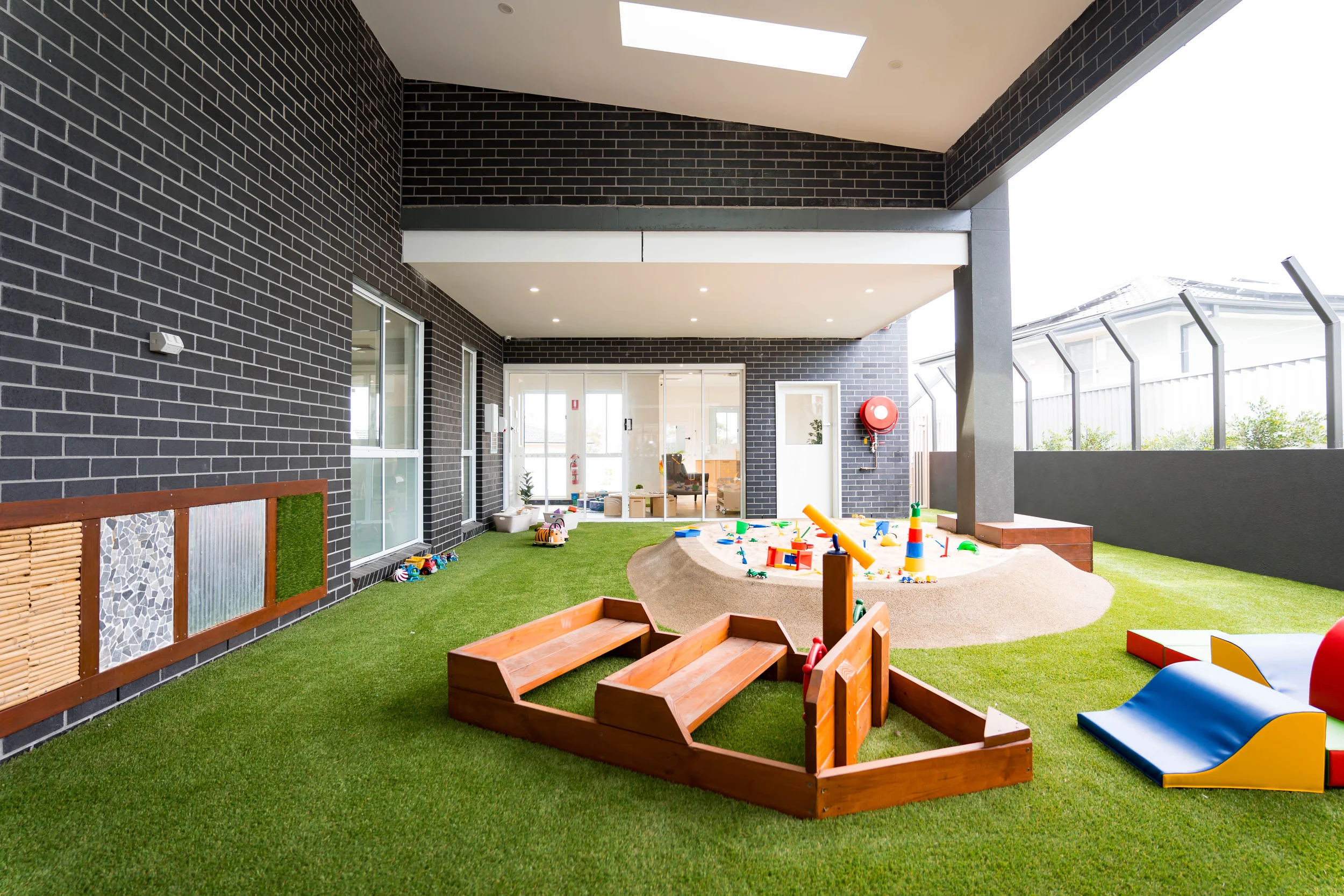
At Kids Central Edensor Park, Centre Manager Sarah Crossan describes remaining present on the floor so educators and children feel supported and guided. The centre also identifies qualified educators, individualised attention and family partnerships as important parts of its approach.
A manager who understands daily practice can support educators before problems become embedded.
Understand Qualifications Without Treating Them as a Marketing Line
A centre may say its educators are qualified, passionate and experienced.
Ask what that means.
Early childhood qualifications cover areas such as child development, health and safety, play-based learning, observation, inclusion, communication and professional responsibility.
Under the National Quality Framework, at least half of the educators required to meet ratios in centre-based services for children aged preschool or younger must hold, or be actively working towards, an approved diploma-level qualification or higher. Other educators counted towards ratios must generally hold or be working towards at least an approved Certificate III qualification. Services must also engage with or have access to an early childhood teacher, with specific requirements that vary based on attendance numbers. (acecqa.gov.au)
Ask:
What qualifications do the educators in this room hold?
Is anyone currently studying towards a qualification?
Who is the early childhood teacher?
How does the centre support ongoing professional development?
How do educators share knowledge across the team?
What training relates to child safety, first aid and inclusion?
Qualifications alone do not guarantee warmth or good judgement.
You are looking for educators who combine professional knowledge with patience, curiosity and respect.
Learn What the Ratios Mean During a Real Day
In New South Wales, centre-based services, minimum educator-to-child ratios are generally:
One educator for every four children from birth to 24 months
One educator for every five children over 24 months and under 36 months
One educator for every ten children aged 36 months through preschool age
Educators must be working directly with children to count towards the ratio. Ratios are calculated across the service, while adequate supervision must still be maintained. (acecqa.gov.au)
Parents should know these numbers, but the most useful conversation comes next.
Ask how staffing works during:
Early morning arrivals
Late-afternoon collection
Educator breaks
Meals
Nappy changes
Toileting
Sleep and rest
Indoor and outdoor movement
An incident involving one child
Staff illness
Days when several children need emotional support
Experiences involving additional risk
A child does not experience the ratio as a calculation.
They experience whether someone notices them.
Can an educator sit with a distressed child without leaving the rest of the group unsupported? Can children receive help in the bathroom while appropriate supervision continues elsewhere?
Numbers provide a minimum foundation. Team organisation determines how that foundation feels in practice.
Ask to See How Learning Develops Over Time
Many centres use phrases such as child-led, play-based and individualised.
Those terms can describe excellent practice, but ask for a real example.
You might say:
“Can you show me how something the children became interested in developed across several days?”
A useful answer may begin with children finding insects outdoors. Educators might add books, drawing tools and magnifying glasses. Families may share photographs or knowledge from home. The children may create theories, return to the area and begin comparing what they notice.
That shows observation, planning and continuity.
Play-based learning does not mean educators leave children to entertain themselves.
An educator may:
Add a resource
Introduce new vocabulary
Ask a question
Help children remember an earlier idea
Support a disagreement
Demonstrate a tool
Adapt an experience
Record an observation
Plan a meaningful next step
Kids Central states that its Edensor Park programs are based on the Early Years Learning Framework and combine structured experiences with free play to support social, emotional, cognitive and physical development.
The learning should suit the child's age.
A baby’s program should not look like a preschool program with smaller furniture. Care routines, movement and responsive relationships are central to infant learning.
Toddlers need language, movement, sensory exploration, and support as they grow in independence.
Preschoolers need challenge, conversation, investigation and opportunities to participate in increasingly complex social play.
Do Not Judge the Program Only by What Goes Home
A painted picture or craft item is visible. It gives parents something tangible to hold.
Some of the most important learning does not fit into a bag.
Your child may be learning to:
Ask for help
Explain an idea
Join another child’s play
Cope when something does not work
Wait for a useful moment to speak
Negotiate
Manage a personal belonging
Persist with a difficult task
Recognise another person’s feelings
Recover after disappointment
Make a choice
Change their plan
Ask educators how they recognise and communicate this learning.
I would be cautious if every child is expected to create an almost identical product.
A row of matching craft may show that an activity was organised efficiently. It may not show what decisions the children made.
Look at the Environment From Your Child’s Height
Adults often notice whether a room is attractive.
Children notice whether they can use it.
Crouch down if you can.
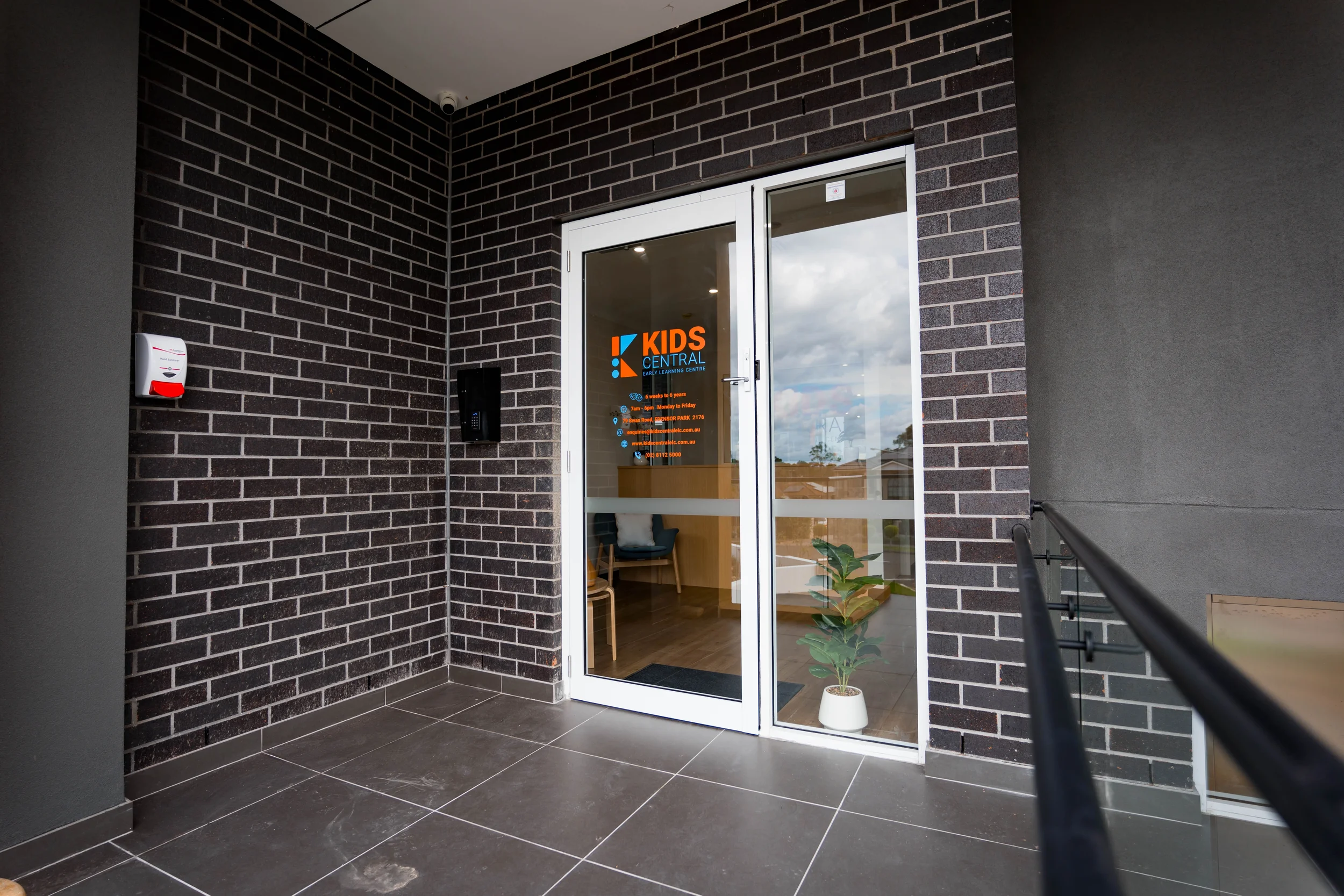
Are resources within reach? Can children see what is available? Are pathways clear? Is there somewhere to be active and somewhere to become quiet?
A thoughtfully planned indoor environment may include:
Construction
Books and storytelling
Imaginative play
Creative materials
Music and movement
Sensory experiences
Small-group activity
Quiet concentration
Rest
Resources that children can choose independently
The environment should not require every child to participate in the same way.
One child may enter a busy group immediately. Another may observe from nearby, choose a quieter experience or need an educator’s help to join.
Both should have a place in the room.
Kids Central describes its Edensor Park facilities as purpose-built, with spacious play areas and age-appropriate resources intended to encourage hands-on exploration.
The appearance is only the beginning. Ask how children influence what happens within the space.
Natural Resources Should Be Used, Not Merely Displayed
Natural materials can include timber, leaves, stones, shells, sand, water and other open-ended resources.
They are valuable when they give children room to make decisions.
A plastic toy may have one obvious purpose. A piece of timber could become part of a bridge, shop, home, road or an invented machine.
Stones might be:
Counted
Sorted
Balanced
Transported
Used in imaginative cooking
Arranged into patterns
Compared by size and texture
The adult does not need to decide the final result.
Ask whether natural and open-ended materials are available during ordinary play or mainly arranged for photographs and special experiences.
The client has specifically identified natural resources and well-planned indoor and outdoor areas as important parts of the intended Kids Central approach.
Treat the Outdoor Area as Part of the Curriculum
A large playground can be impressive, but size does not explain how the area is used.
Outdoor learning may include:
Running and climbing
Water and sand
Gardening
Building
Drawing
Nature observation
Safe physical challenge
Dramatic play
Group games
Quiet conversation
Experiences that change with the weather
Ask:
How much time do children usually spend outdoors?
Can they move between indoor and outdoor areas?
What happens in very hot, cold or wet weather?
How is shade provided?
How are physical risks assessed?
Are there quieter outdoor spaces?
Can babies safely experience the outdoors?
Are children involved in caring for the environment?
Children need movement, but outdoor learning should not be reduced to releasing energy before returning to the real program indoors.
Safe and Clean Should Mean More Than Looking Tidy
A clean room during a scheduled tour does not tell you how health and safety are managed throughout the week.
Ask the centre to explain:
Secure entry
Authorised collection
Supervision
First aid
Medication
Illness and exclusion periods
Allergies
Emergency procedures
Sleep and rest
Sun protection
Cleaning routines
Nappy changing
Toileting
Incident reporting
Child-protection responsibilities
Photography and personal-device practices
Kids Central publicly identifies secure entry, regular health and safety checks, staff background checks and ongoing emergency training as elements of its Edensor Park approach.
Do not feel that asking detailed safety questions suggests distrust.
A professional service should expect parents to ask.
Notice how supervision works
Supervision is not only about having adults somewhere in the area.
Educators need to know where children are, what they are doing and when a situation requires closer attention.
During a tour, notice whether:
Educators position themselves where they can see children
Blind spots appear to be managed
Adults move when children move
One conversation does not distract the entire team
Entry points remain monitored
Children can access bathrooms safely
Indoor and outdoor responsibilities are clear
The room does not need to feel tense or constantly controlled.
Good supervision allows children freedom while keeping adults aware and available.
Ask About Sleep and Rest Even if Your Child No Longer Naps
Sleep and rest practices matter for babies, toddlers and preschoolers.
Ask:
How are individual sleep routines discussed?
Where do children sleep?
How is supervision maintained?
What happens if a child does not sleep?
Are children required to remain in a bed for a fixed period?
Can a child access a quiet alternative?
How are sleep changes communicated?
What comfort items are permitted?
How does the service respond to family or medical guidance?
A child who no longer sleeps should still have a chance to slow down.
Rest should not mean forcing every child into the same response.
Read the Menu, Then Ask About the Mealtime
A planned menu gives you useful information about nutritional variety.
The way meals are handled tells you how children experience that food.
Ask:
Where are meals prepared?
How often does the menu change?
How are allergies managed?
What happens when a child refuses food?
How are medical, religious and cultural requirements supported?
Are children pressured to eat?
How are feeding difficulties approached?
What drinks are offered?
How do families receive updates?
Can parents see the menu in advance?
Kids Central’s published daily fee inclusions currently cover five nutritional meals cooked each day by an on-site cook. Its FAQ also describes alternative ingredients for allergy-related needs, allergy information available to staff, and controls intended to reduce cross-contamination.
Mealtimes are also opportunities for children to practise independence, conversation and recognising hunger and fullness.
A child who is cautious around unfamiliar food should not be described as difficult.
Families and educators should be able to discuss food without blame.
Inclusion Should Change the Experience, Not Just the Enrolment Form
A centre can accept children from different backgrounds without meaningfully including them.
Inclusion asks whether children can participate, communicate, form relationships and influence what happens around them.
Your child may need consideration related to:
Disability
Development
Communication
Mobility
Sensory processing
Medical care
Behaviour
Home language
Culture
Religion
Family structure
Emotional wellbeing
Ask how the service adapts.
That might include:
Visual supports
Different ways of giving instructions
More processing time
Adjustments to room layout
Suitable equipment
A quieter space
Collaboration with allied health professionals
Changes to an activity
Key words from the child’s home language
Individual medical planning
Kids Central’s philosophy describes diversity, inclusion and collaboration with families as central to its approach. Its child-safety commitment also gives particular attention to Aboriginal children, children from culturally and linguistically diverse backgrounds and children with disabilities.
The most useful question is not only:
“Can my child enrol?”
Ask:
“How will my child take part?”
Listen to How the Centre Talks About Behaviour
Children will disagree, become frustrated and test boundaries.
That is part of living and learning with other people.
Ask how educators respond when a child:
Hits
Bites
Pushes
Runs away
Refuses a routine
Shouts
Withdraws
Repeatedly interrupts
Struggles with transitions
You are not looking for a centre with no difficult moments.
You are listening to whether educators think beyond punishment.
Do they consider development, communication, sensory needs, tiredness, environment and relationships? Do they teach safer alternatives? Do they communicate with families without humiliating the child?
A boundary can be firm and respectful at the same time.
For example:
“I will not let you hit. You wanted him to move away. I will help you tell him.”
That response protects the other child while also teaching communication.
Family Communication Should Include Difficult Days
Photographs and activity updates can help parents feel connected.
They are not the full relationship.
Ask who will speak with you when:
Your child is distressed
An incident occurs
Educators notice a developmental change
Eating or sleep changes
A friendship becomes difficult
Your family circumstances change
Additional support may be useful
You disagree with a decision
You need to make a complaint
Kids Central uses the secure OWNA app for private parent communication and also describes regular family involvement and feedback as part of its approach.
An app can tell you that your child ate lunch.
A conversation may help you understand why they were unusually quiet or what gave them confidence during the day.
You need both practical updates and access to people who know your child.
Ask How Families Influence the Program
Partnership should involve more than receiving information.
Families hold knowledge about their child’s:
Relationships
Culture
Language
Interests
Routines
Strengths
Fears
Health
Development
Experiences outside the centre
Ask how educators use that knowledge.
A family might mention that their child became interested in construction after watching work near home. Educators could add plans, measuring tools, photographs and different building materials.
Another family may share a song, a story or an important community event.
Family involvement does not require parents to attend every activity or provide free labour.
It means the service treats your knowledge as relevant.
Look Closely at the Centre’s Approach to School Readiness
For preschool-aged children, ask what the centre means by school readiness.
I would be cautious if the answer focuses mainly on worksheets, handwriting and sitting still.
Children also need opportunities to develop:
Communication
Confidence
Emotional regulation
Independence
Physical coordination
Relationships
Curiosity
Persistence
Group participation
Responsibility for belongings
Early literacy and numeracy through meaningful experiences
Kids Central’s Transition to School Program includes social, emotional, physical and cognitive development alongside early literacy and numeracy, individual planning and familiarity with school routines. (kidscentralelc.com.au)
A child may encounter literacy while listening to stories, recognising their name, creating signs or explaining a drawing.
They may encounter numeracy while counting plates, comparing structures, noticing patterns or sharing resources.
School preparation should build confidence in learning, not make preschool feel like primary school has started early.
Ask How the Centre Responds When Something Goes Wrong
Quality is not proved by claiming that problems never occur.
Children become unwell. Incidents happen. Parents and educators misunderstand one another. A planned experience may not work. A staffing change may affect a room.
The centre’s response tells you a great deal.
Ask:
How are incidents communicated?
When will the centre call immediately?
Who investigates a concern?
How can families make a complaint?
What happens after a complaint is received?
How are changes explained to families?
How does the centre review its practice?
Will management follow up?
How is confidentiality protected?
Listen for a process rather than reassurance alone.
A service that values improvement should be able to talk about feedback without becoming defensive.
Compare the Full Fee, Not Only the Daily Number
Two centres with similar fees may include different things.
Ask for written information covering:
Daily fees
Meals
Nappies and wipes
Linen
Sunscreen
Educational programs
Excursions or special activities
Enrolment charges
Deposits
Late collection fees
Public holidays
Absences
Notice periods
Fee increases
Child Care Subsidy processing
Kids Central’s current published inclusions cover age-based educational programs, its transition-to-school program, five meals, nappies, wipes, bed linen and sunscreen.
Do not assume another service includes the same items.
The relevant figure is the real out-of-pocket cost and what your family must provide each day.
Notice What Is Missing From the Conversation
Sometimes a tour tells you something through the questions nobody asks.
Does anyone ask about your child beyond their age and required days?
You should have opportunities to discuss:
Temperament
Communication
Home language
Interests
Separation
Sleep
Food
Medical needs
Disability
Culture
Family circumstances
Previous care experiences
What helps your child feel safe
A service that wants to fill a vacancy may focus on dates, fees and forms.
A service preparing to receive a child should also want to know who that child is.
Useful Green Flags
No single feature proves that a centre is right, but the following combination is encouraging:
Educators greet children by name
Children approach adults for help
Distress receives a calm response
Staff answer detailed questions openly
The manager understands the daily room practice
Educators can explain recent learning through real examples
Indoor and outdoor spaces offer active and quiet choices
Resources are available for children to use in different ways
Safety procedures can be explained clearly
Families are asked about language, culture and routines
Inclusion is discussed in terms of participation
Meals and personal care are handled respectfully
Orientation can respond to the individual child
Communication includes challenges as well as positive moments
Staff appear supported rather than constantly rushed
The centre is honest about what it can and cannot provide
You may not leave feeling dazzled.
You may leave feeling heard.
That is often more meaningful.
Signs That Deserve Another Question
Ask for more information when:
Educators appear too rushed to notice children
Adults use humiliating or dismissive language
Distress is treated mainly as misbehaviour
The centre cannot explain who will work with your child
Staffing questions receive vague answers
Every child completes identical activities
Outdoor time appears limited or unplanned
Quiet spaces are unavailable
Orientation consists only of paperwork
Home language is treated as a problem
Inclusion is reduced to accepting an enrolment
Toileting accidents are discussed with embarrassment
Allergy or medication questions are treated casually
Safety claims remain broad
Fee conditions are difficult to obtain
Parents are discouraged from raising concerns
The marketing language is much more specific than the answers provided during the tour
A concern may have a reasonable explanation.
The point is to ask rather than ignore it.
Compare Centres Using the Same Questions
After several tours, details can blur together.
Use the same headings for each centre.
Relationships
Did educators speak with children respectfully? Could I imagine my child asking these adults for help?
Educators
Who will know my child? What qualifications and experience does the team have? Does leadership appear involved?
Program
Could the service explain how children’s interests and development shape learning?
Environment
Are there meaningful indoor, outdoor, active and quiet opportunities?
Safety
Were supervision, access, medication, allergies and incidents explained clearly?
Inclusion
How would the centre respond to my child’s language, culture, disability, medical needs or communication?
Settling
Will educators get to know my child before the first full day?
Communication
Will I receive useful information and have access to a real conversation?
Practical fit
Do the location, days, hours, fees and inclusions work for our household?
Do not let a high overall score hide one essential problem.
A centre may appear strong in many areas but be unable to safely meet a non-negotiable medical or support need.
Where Kids Central Fits Into Your Western Sydney Search
Kids Central currently operates itsEdensor Park early learning centre at 79 Swan Road from 7.00 am to 6.00 pm, Monday to Friday. The centre offers nursery, toddler, preschool and transition-to-school programs.
A newKids Central Colyton centre has also been announced for 2026. Families should confirm their final address, opening date, hours, fees and service information as those details are released.
Across our approach, we want early learning to include:
Qualified educators
Safe and clean environments
Natural resources
Well-planned indoor and outdoor areas
Inclusion
Family communication
Health and safety
Planned meals
Relationships with children, families and the community
Time to get to know a child before they begin
Those principles matter, but I do not expect you to enrol because they appear in an article.
Come and see how they work.
Choose the People and Practice, Not Just the Place
A childcare centre becomes part of your family’s week.
Your child may spend hundreds of hours there over the course of a year. They will experience ordinary mornings, difficult separations, favourite games, meals, friendships, mistakes, rest and discovery.
The centre does not need to promise that every day will be perfect.
It should show that children will be safe, known and treated with respect when the day is easy and when it is not.
Look at the building, but watch the people.
Read the menu, but ask how a child who refuses food will be treated.
Check the ratio, but find out whether educators are available.
Review the program, but listen to whether your child’s interests can influence it.
Ask about communication, but make sure somebody is prepared to have a real conversation.
At Kids Central Early Learning Centre, you are welcome to visit, meet the educators and ask detailed questions about care, learning, safety, inclusion and daily routines.
You do not need to arrive with a perfect checklist.
Tell us about your child and the life your family actually lives. That is where a useful conversation about childcare should begin.