
Why Colyton Families Are Looking for High-Quality Early Learning Centres
If you have ever typed “why early learning centre” into a search bar, the question behind those words was probably more personal than it appeared.
You may be returning to work and wondering how your child will cope without you. You may want them to spend time with other children before school. Perhaps a relative has been helping with care, but the arrangement is becoming difficult to maintain. You may simply feel that your child is ready for more experiences than you can consistently provide at home.
There is no single reason families begin looking for early learning.
What I do notice is that parents are rarely searching for somewhere that will merely keep their child occupied until collection time. They want to know who will comfort them, what they will learn, how safely they will be cared for and whether the educators will listen to the family rather than treating every child the same.
That is why the word “quality” matters.
High-quality early learning is not a luxury added after the practical need for childcare has been met. The quality of the relationships, educators, environment, communication and daily care determines what those hours actually mean for the child.
For families in Colyton, having a trusted option close to home can also make everyday life more manageable. It can connect care, learning, work and community without requiring the family to organise each part separately.
Colyton Is Home to Many Families With Young Children
The need for local early learning becomes clearer when we look at the community itself.
The 2021 Census recorded 8,770 people and 2,289 families in Colyton. There were 607 children aged from birth to four, representing 6.9 per cent of the suburb’s population. Couple families with children made up 43.7 per cent of local families, while one-parent families accounted for 25.4 per cent.
Statistics cannot describe every household.
They do show that young children and the people who raise them make up a substantial part of Colyton. They also remind us that local families do not all have the same support, schedule or financial circumstances.
One household may have two parents coordinating work and collection. Another may have one parent carrying most of that responsibility. Some families have grandparents nearby. Others have relatives overseas, interstate or are unable to provide regular care.
That changes what a local early learning centre may need to provide.
For one family, the priority may be dependable weekday care. For another, it may be school preparation, social opportunities, nutritious meals or support for a child who needs time to become comfortable in a new environment.
A high-quality service does not assume every family is asking the same question.
It begins by listening.
Families Need Reliability, Not Another Fragile Arrangement
Many parents build childcare from several pieces.
A grandparent helps one day. A parent changes shifts with another. A friend manages an emergency collection. Babysitting fills an occasional gap.
These arrangements can be generous and deeply valuable. They can also become difficult to sustain over time.
Relatives may have their own work or health needs. Employment hours can change. A trusted babysitter may become unavailable. A parent may find themselves reorganising the entire week whenever one person is sick.
A long-day care centre offers a different type of continuity.
The service has a team, operating hours, established routines and professional responsibilities. Care is not dependent on one individual being available every day.
For working families, that reliability matters. However, I do not think we should describe it only as convenience for adults.
Consistency also matters to children.
When children return to a familiar environment, they begin to recognise:
The educators who care for them
Where their belongings go
What happens after arrival
Where they can find favourite resources
Who they may play with
How meals and rest fit into the day
Which adults can help when something feels difficult
That their family leaves and returns
Those repeated experiences can build security.
The value is not simply that care is available. It is that the child can gradually become known within it.
Parents Are Looking for More Than Supervision
A child can be physically safe and still spend a day without meaningful connection, choice or learning.
High-quality early learning combines care with education in ways that suit young children.
That does not mean formal lessons begin in infancy or that preschool children spend the day completing worksheets.
Young children learn through:
Movement
Relationships
Conversation
Repetition
Sensory experiences
Play
Observation
Trying things for themselves
Watching other people
Making and revising ideas
A baby learns during feeding, floor play and face-to-face communication. A toddler learns while filling a container with water, attempting to put on a shoe or trying to enter another child’s game. A preschooler learns while telling a story, negotiating the rules of pretend play or working out why a structure keeps falling.
Qualified educators recognise these moments and consider how to extend them.
They may introduce language, add a resource, ask a question, provide emotional support or adjust an experience so another child can participate.
TheEarly Years Learning Framework guides early learning programs for children from birth to five years. It supports play-based learning, secure relationships, cultural responsiveness, family partnerships and attention to each child’s development, interests and experiences.
This is one reason families seek an early learning centre rather than care based only on supervision.
They want their child’s day to contain care, but not stop there.
Quality Begins With the Child’s Relationships
Parents naturally notice buildings when they visit a centre.
The rooms may be new, the outdoor area may be spacious, and the shelves may contain attractive resources.
I would still look at the relationships first.
A young child needs adults who notice their communication, respond to distress and take their ideas seriously.
That can appear in very ordinary moments.
An educator may wait while a child searches for a word rather than answering for them. They may recognise that a toddler is becoming overwhelmed before the situation becomes a larger conflict. They may explain what is happening during a nappy change instead of treating the child’s body as another task to complete.
The National Quality Standard identifies responsive and respectful relationships as essential to children’s security and belonging. It also connects qualified and experienced educators with predictable environments and active engagement in learning.
These relationships are not created by displaying caring words on a website.
They develop when educators have the knowledge, time and support to understand individual children.
Parents are therefore asking more detailed questions:
Will the educators know my child properly?
Who will comfort them?
Will someone notice if they are quieter than usual?
How will strong emotions be handled?
Will my child be spoken to respectfully?
What happens if they do not join the group immediately?
Who supports the educators when the day becomes difficult?
Those are quality questions.
Children Should Not Need to Earn Their Place in the Room
Colyton is culturally diverse.
The Census recorded that a non-English language was used in 33.1 per cent of households. Arabic, Hindi, Samoan, Tagalog and Turkish were among the most commonly reported languages other than English.
For early learning services, that should mean more than displaying several flags.
Families may bring different languages, foods, faiths, celebrations, family structures and expectations about care. Children may understand more than one language or communicate more confidently at home than they initially do in the centre.
A high-quality service should be curious about that knowledge.
Educators can ask:
How is the child’s name pronounced?
Which language do they understand most easily?
What words do they use for water, toilet, sleep or help?
Which family members are important to them?
Are there cultural or religious routines we should understand?
How does the family prefer important information to be discussed?
What would help the child see their life represented in the environment?
The child should not receive the message that English, a single family structure, or a single set of traditions is the price of belonging.
Inclusion also extends beyond culture and language.
A child may have a disability, a developmental delay, a medical condition, a sensory difference, or a communication need. Meaningful inclusion asks whether they can participate, form relationships and influence what happens around them.
It may require educators to:
Change the way information is given
Use visual supports
Allow more processing time
Adjust a physical space
Offer another way to join an activity
Work with allied health professionals
Review routines with the family
Select appropriate equipment
Help other children understand difference respectfully
Accepting an enrolment is not the same as including a child.
Families are looking for centres that understand the difference.
Qualified Educators Bring Professional Knowledge to Everyday Moments
Parents sometimes hear childcare qualifications discussed as though they are mainly an administrative requirement.
They are much more than that.
Early childhood educators study areas such as development, play-based learning, observation, safety, inclusion, communication and professional responsibility.
That knowledge influences how they interpret what they see.
Consider a child who repeatedly pushes another child away from a play space.
An adult might describe the behaviour only as naughty.
An educator may look more closely.
Does the child have the language to say they need space? Are they protecting something they have worked hard to build? Is the area crowded? Do they understand how another child can enter the game? Are they overwhelmed, or are they repeating an interaction they have seen elsewhere?
Understanding the reason does not mean allowing unsafe behaviour.
It helps the educator respond in a way that teaches rather than merely punishes.
Professional knowledge also matters when educators:
Plan age-appropriate experiences
Recognise developmental changes
Support children through separation
Respond to allergies or medical needs
Communicate a concern respectfully
Adapt an activity
Document learning
Work with families and specialists
Maintain safe supervision
Prepare children for transitions
High-quality early learning depends on more than good intentions.
Children need caring people who also understand the responsibility of the work.
Ratios Matter Because Children Need Available Adults
Educator-to-child ratios are minimum staffing requirements. They help determine how many educators must be working directly with children.
In New South Wales, centre-based services, the minimum ratios are generally:
One educator for every four children from birth to 24 months
One educator for every five children over 24 months and under 36 months
One educator for every ten children aged 36 months through preschool age
You can check the current requirements throughACECQA’s official educator-to-child ratio guidance.
The numbers matter, but parents are increasingly aware that a legal minimum does not tell the entire story.
A centre must still organise educators effectively during:
Arrivals and departures
Meals
Nappy changes
Toileting
Sleep and rest
Indoor and outdoor play
Staff breaks
Room transitions
Incidents
Times when several children need support
A child does not experience a ratio as a number.
They experience whether an adult is available.
Can someone respond when they are upset? Can an educator sit with a small group and listen properly? Can a child receive help in the bathroom without the rest of the room losing appropriate supervision?
High-quality centres think about staffing as a condition for relationships, safety and learning, not only a regulatory calculation.
Families Want Their Child to Be Known Before the First Full Day
The start of care can be emotional for the whole family.
Some children enter a new room and begin exploring immediately. Others remain close to their parent, watch quietly or become distressed when separation begins.
Neither response tells us whether the child is capable or ready.
It tells us how they are experiencing that particular moment.
Orientation helps make the unknown smaller.
At Kids Central, our settling approach can include visits before commencement, time spent getting to know the child and conversations about home routines, communication and comfort.
We may also suggest bringing a family photograph.
A familiar image can help a child maintain a connection with home while they build trust with educators. It gives us a natural way to speak about the people who matter to them and remind them that their family returns.
Before a child starts, educators may need to understand:
How they communicate
What helps them calm
How they show tiredness or hunger
Which routines matter at home
What separation has looked like before
Which words are familiar
What interests them
Whether they have sensory sensitivities
Whether there are medical or developmental needs
Which family or cultural information is important
This is not extra background material.
It is part of preparing the service to receive the child well.
Parents are looking for centres that share responsibility for the transition rather than placing the entire burden on the child.
A Safe and Clean Environment Must Work Beyond the Tour
Safety and cleanliness are common promises because every parent expects them.
The real question is how they are maintained once the centre is busy.
Families want to know about:
Secure entry and collection
Supervision
Hygiene
Nappy-changing procedures
Toileting
Illness
Medication
Allergies
Emergency preparation
Sleep and rest
Sun protection
Equipment maintenance
Incident communication
Child-protection responsibilities
Photography and personal devices
TheNational Quality Standard provides the national benchmark for approved education and care services. Its seven areas include educational programs, health and safety, physical environments, staffing, relationships, family partnerships and leadership. Services are assessed against each area and receive an overall rating.
Parents should use that framework, but they should also keep asking practical questions.
A centre can look clean at the beginning of a tour. Quality is reflected in how hygiene, safety, and respectful care are maintained throughout the day.
A trustworthy service should explain its practices without making it difficult for parents to ask.
The Environment Should Give Children Something Meaningful to Do
A high-quality environment does not need to overwhelm children with equipment.
It needs to give them worthwhile choices.
Children should be able to move, investigate, create, rest and spend time with others. They should also have opportunities to step away from a busy group without being excluded from the room.
Well-planned indoor areas may support:
Construction
Imaginative play
Books and storytelling
Creative expression
Music
Sensory investigation
Small-group interaction
Quiet concentration
Rest
Independent selection of resources
Outdoor environments should provide more than a fixed climbing structure.
Children can learn outdoors through:
Running and balancing
Water and sand
Gardening
Building
Drawing
Nature observation
Cooperative games
Safe physical challenge
Quiet conversation
Dramatic play
Natural and open-ended resources can make these environments richer.
Timber pieces, stones, shells, leaves, water, sand and fabric do not always tell a child what the final result should be. They can be sorted, moved, counted, balanced, combined and transformed through imagination.
The educator does not need to decide every outcome.
That room for thought is part of the learning.
Colyton’s Local Spaces Also Show the Value of Inclusive Play
Early learning does not end when a child leaves the centre.
Local spaces can support movement, community connection and repeated family experiences.
Penrith City Council completed an upgrade of Gilmour Street Reserve in Colyton in April 2025. The playspace includes climbing equipment, slides, a basket and toddler swings, a mini bike path, an accessible rocker, a play shop front, balance elements, seating, pathways and a shaded picnic area. Council described the project as part of a wider effort to provide modern, inclusive places for children close to home.
That local investment reflects something families already understand.
Children need accessible places where they can move, play and belong.
A quality early learning centre can contribute to the same community picture. It gives children another local environment in which they can form relationships, learn about the people around them and become familiar with life beyond home.
The centre should not operate like an island.
Educators can build community connection by drawing on local experiences, inviting family knowledge and helping children recognise that they are part of a wider place.
Planned Meals Can Remove Pressure From the Family Day
Food is a major part of long-day care.
A child may eat several meals and snacks at the centre, so families want more than a vague promise that food is healthy.
They want to know:
What appears on the menu
Where meals are prepared
How often the menu changes
How allergies are managed
Whether cultural and religious needs are respected
How medical dietary requirements are handled
What happens when a child refuses food
How sensory feeding needs are approached
Whether children are pressured to eat
How families receive updates
Planned menus can support nutritional variety and make the daily routine clearer for families.
Mealtimes can also help children develop independence and social confidence. They practise using utensils, pouring water, talking with others and recognising their own hunger and fullness.
At Kids Central’s future Colyton centre, healthy daily meals are planned to be included alongside nappies, wipes and sun-safety provisions.
Those inclusions can simplify the family’s morning, but the quality of the experience still depends on how care is provided.
A child should not be judged for having difficulty eating.
Educators and families need to share information and work patiently towards a safe approach.
Communication Gives Parents a Way to Remain Involved
Leaving a child in care does not mean parents stop being part of their learning.
You hold knowledge that educators cannot gain from an enrolment form alone.
You know your child’s history, relationships, home language, routines and behaviour across different settings. Educators see how the child participates in a group, approaches new experiences and forms relationships outside the family.
Both perspectives are useful.
A high-quality centre creates ways for that information to move in both directions.
Daily communication may include:
Meals
Sleep and rest
Toileting
Activities
Emerging interests
Friendships
Emotional wellbeing
Incidents
Changes educators have noticed
However, an update platform should not replace a proper conversation.
Parents need to know who they can approach when:
Separation remains difficult
Family circumstances change
A child is behaving differently
There is a developmental concern
A medical need changes
The parent disagrees with a decision
Additional support may be required
Something at the centre does not feel right
The National Quality Standard describes collaborative relationships with families as fundamental to quality outcomes. It also recognises active communication, consultation and community collaboration as essential.
For me, good communication is not a stream of polished photographs.
It is the confidence that important information will not be avoided.
Parents Want School Readiness Without Losing Childhood
School readiness is one reason families begin looking for an early learning centre.
That does not mean parents necessarily want formal lessons earlier.
Many want their child to become more comfortable with:
Being part of a group
Asking an adult for help
Listening to another person
Managing belongings
Moving between experiences
Using the toilet with growing independence
Coping when a preferred activity ends
Forming friendships
Communicating ideas
Persisting with a difficult task
Early literacy and numeracy skills belong in the preschool years, too, and can be developed through meaningful play.
Children encounter literacy when they listen to stories, recognise their names, make signs, sing rhymes and explain drawings.
They encounter numeracy when they compare sizes, count plates, notice patterns, divide resources and work out whether a block will fit.
Children do not need to complete formal schoolwork all day to be learning.
Kids Central has announced that its Colyton service will include school-readiness support. Its existing Transition to School approach includes social, emotional, physical and cognitive development alongside early literacy and numeracy.
A high-quality program helps children approach school with curiosity and confidence.
It does not make preschool feel like school has already started.
Early Learning Can Support Parents Without Replacing Them
Parents sometimes worry that enrolling a child in care means giving another person too much influence over their early years.
Quality early learning should not compete with the family.
It should form a partnership with them.
The centre knows the child better because it has professional educators. The parent does not have to manage every challenge alone because they know the child best.
Each side brings different knowledge.
A family may tell educators that a child has become fascinated with buses. The centre can extend that interest through books, construction, drawing, counting or discussion about the local community.
Educators may notice that a child speaks confidently in a small group but becomes silent when the group grows. The family and educators can consider together what helps the child participate.
That partnership can also give parents another informed person to speak with.
An educator cannot diagnose a developmental condition and should not replace medical or allied health advice. They can share careful observations, listen to concerns and help families understand what the child is doing within the early learning environment.
Sometimes reassurance is useful.
Sometimes, early attention to a concern is useful.
The relationship should make room for both.
A Local Centre Can Make the Whole Week More Workable
Quality is essential, but early learning also needs to fit into real life.
Colyton is primarily residential and sits close to major routes, including the Great Western Highway and M4. The Census recorded an average of 1.9 vehicles per dwelling, and 58.4 per cent of employed residents who travelled to work did so by car, as a driver or passenger, during the Census reference period.
Those figures do not tell us how every family travels now.
They do suggest why location can have such a strong effect on the family day.
A centre close to home may reduce:
Time spent crossing Western Sydney before work
Pressure on morning routines
The distance a grandparent travels for collection
The complexity of coordinating siblings
Disruption when work finishes later than expected
The separation between a child’s care and the local community
Convenience should never be used to excuse poor quality.
The ideal is access and quality together.
Parents should not have to choose between an environment they trust and a routine their household can realistically sustain.
One-Parent Families May Need Especially Dependable Support
Colyton’s proportion of one-parent families was 25.4 per cent in the 2021 Census, compared with 15.8 per cent across New South Wales.
That does not mean every single-parent household has the same needs or experiences hardship.
It does remind us that a significant number of local parents may be coordinating work, appointments, illness, fees, drop-off and collection without another parent sharing the daily logistics.
For these families, reliable early learning can become an important part of the support structure.
Clear communication matters because there may be less time to chase information.
Reliable operating arrangements matter because a sudden change may be difficult to absorb.
Included meals and care essentials may matter, as each item removed from the morning list can make the routine more manageable.
Respect matters too.
A service should never treat one family structure as the default and others as an exception.
Children should see many kinds of families represented without being asked to explain why their home is different.
High Quality Is Not the Same as Expensive or Impressive
Parents can feel pressure to judge quality by what is easy to market.
A centre may have:
An impressive entrance
New furniture
A long activity list
Branded programs
Elaborate displays
Additional classes
Technology throughout the rooms
Some of those features may add value.
None proves that children are treated well.
A centre with modest resources may offer deeply responsive relationships and thoughtful learning. A visually impressive centre may still have rushed educators, limited child choice or weak communication.
I would judge quality through questions such as:
Are children emotionally and physically safe?
Do educators know them?
Are qualifications and staffing treated seriously?
Does the program respond to children?
Can different children participate?
Are families listened to?
Is food handled safely and respectfully?
Are the environments used thoughtfully?
Does leadership support the educators?
Are concerns discussed honestly?
Does the centre keep trying to improve?
That is why official quality information can help.
The NQS brings these areas together and gives families a framework that goes beyond presentation.
Why the New Kids Central Colyton Centre Has Attracted Interest
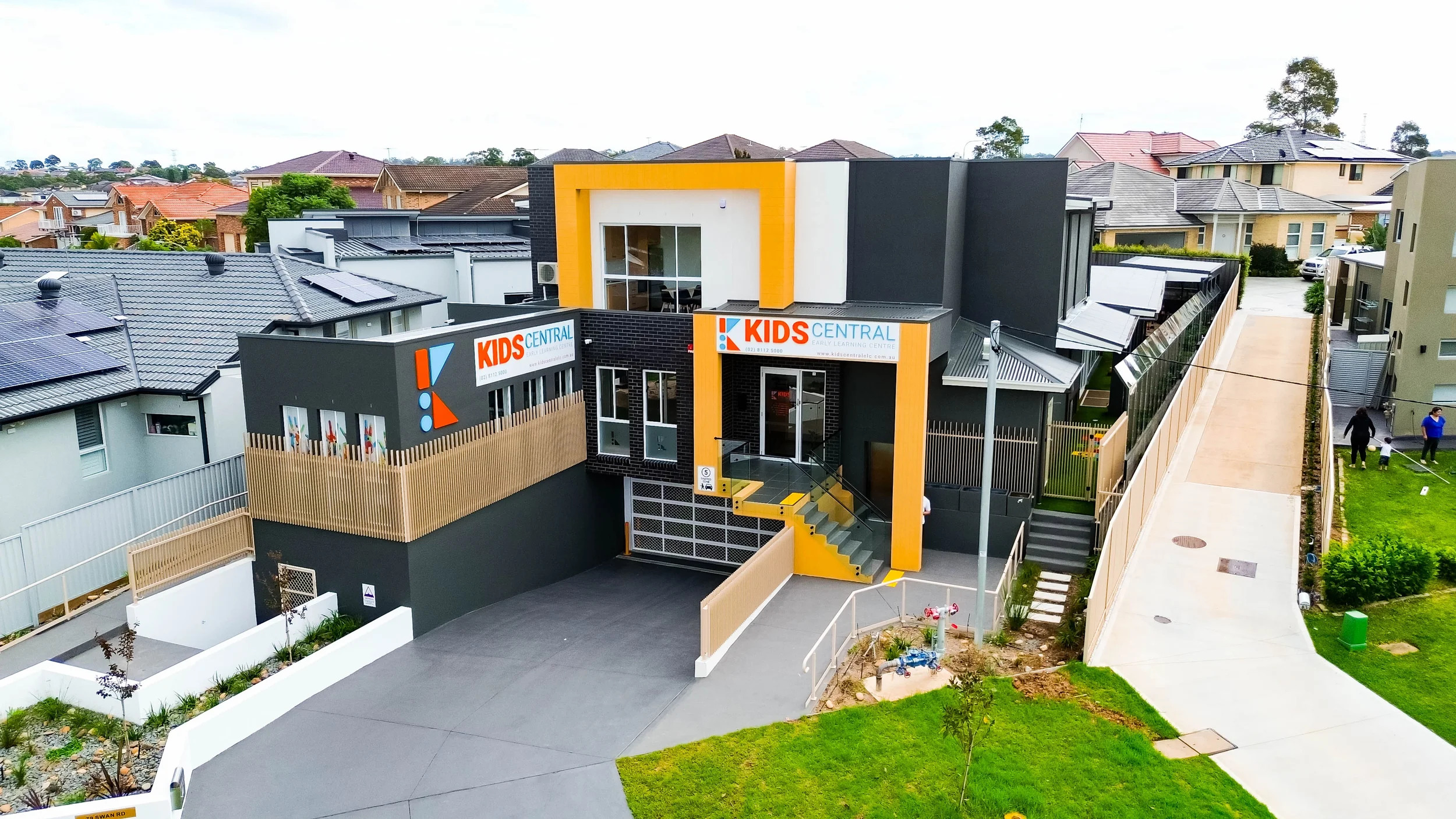
Kids Central has announced that a new early learning centre is coming to Colyton in 2026.
The planned service is expected to provide education and care for children aged six weeks to six years, purpose-built learning environments, experienced educators, school-readiness support, healthy meals, nappies, wipes and sun-safety inclusions. Expressions of Interest are open.
For local families, that announcement represents more than another building.
It creates the possibility of:
Quality care closer to home
Age-based early learning
A consistent path from infancy towards school
Purpose-built indoor and outdoor environments
Family communication
Included meals and care essentials
A local community of children, educators and parents
Another option when existing arrangements are not suitable
The final decision still needs to be based on details.
The public website does not currently provide a confirmed street address, exact opening date, Colyton's operating hours, fee schedule, approved number of places, or a named educator team.
Families should ask for that information as it becomes available.
You can read ourguide to what families can expect from the new Colyton centre for a detailed breakdown of what has and has not yet been announced.
What Families Should Expect From Kids Central Colyton
Our intention is to create an environment where children are known, supported and encouraged to participate.
That means more than arranging activities.
It means learning:
How your child communicates
What makes them feel secure
Which relationships matter at home
What interests them
Which routines are familiar
What they find difficult
Whether they need additional support
How their culture and language can remain part of the day
The announced Colyton approach includes qualified and caring educators, purpose-built facilities, safety practices and active family engagement. Kids Central also states that the centre will seek family feedback and encourage participation in children’s learning.
As the service moves closer to opening, families should receive more practical details about how those principles will operate each day.
Promises matter.
Practice matters more.
Questions Families May Be Asking Now
Why choose an early learning centre instead of care at home?
Home-based care can be appropriate for many families. An early learning centre offers a regulated environment, qualified educators, peer relationships, planned learning, group routines and ongoing communication across repeated days.
The choice depends on what your family needs.
Does my child need early learning before school?
Children can learn in many environments, including at home.
An early learning centre can provide regular opportunities to form relationships outside the family, participate in a group and explore a wider range of experiences with professional support.
It should add to the child’s life rather than suggest that family learning is inadequate.
Will my child receive enough individual attention?
That depends on how the service organises staffing and relationships.
Ask about ratios, educator consistency, room leadership and how individual needs influence the program. Quality group care should still recognise the person within the group.
What if my child finds separation difficult?
Separation can take time.
Ask about orientation, familiarisation visits, shorter initial days where appropriate, family photographs, comfort strategies and how educators will communicate with you.
A child should not be judged because they need time to build trust.
What if my child speaks another language?
Continue using the language in which your family communicates most naturally.
Tell educators which languages your child understands and share important words. Ask how the program will represent your family and help your child communicate.
What if my child has additional needs?
Raise the conversation early.
Share relevant plans and professional information, but also describe your child’s interests, strengths and communication. Ask how the environment, routines and experiences can be adjusted to support meaningful participation.
Is a new centre automatically high quality?
No.
A new building can offer purpose-built environments and new resources, but quality depends on educators, leadership, safety, relationships, planning and communication.
Visit when tours become available and ask how the service will work during an ordinary day.
How can I check official quality information?
Once a service is approved and information is published, families can search throughStartingBlocks.gov.au. The platform provides service details and published quality ratings for approved services.
The Colyton service is still publicly described as coming in 2026, so families should check again as the opening approaches.
The Real Reason Families Are Looking
Parents are looking for high-quality early learning because the hours matter.
A child may spend a large part of their week in care. Those hours can contain comfort, conversation, movement, friendship, frustration, meals, rest, discovery and change.
Families want to know that someone is paying attention.
They want educators who understand that a child’s behaviour communicates something, that culture belongs in everyday life and that school readiness involves far more than academic performance.
They want a safe and clean environment, but they also want warmth.
They want qualified educators and appropriate ratios, but they also want those educators to have enough support to form relationships.
They want daily updates, but they also want honest conversations.
They want their child to belong without needing to become easier, quieter or more like everyone else first.
That is the real answer to why families are looking for quality.
A New Local Relationship for Colyton Families
Kids Central Early Learning Centre Colyton is planned to open in 2026, with Expressions of Interest currently available.
You canregister your interest in Kids Central Colyton and identify the days of care your family is seeking.
Registration is only the beginning.
As more information becomes available, ask about the educators, rooms, fees, operating hours, orientation, meals, inclusion and how family communication will work.
You can also read our guide tochoosing the right preschool in Colyton when you are ready to compare your options more closely.
I do not expect families to choose us because we use the right words on a website.
We want the opportunity to show you what those words mean in practice, to listen to what matters to your child, and to build the relationship gradually.
High-quality early learning should give parents more than a place in a room.
It should give the child people who are ready to know them.