
New Childcare Centre in Colyton: What Families Can Expect in 2026
When a new childcare centre is announced close to home, families naturally want details straight away.
You may want to know exactly when it will open, where it will be located, what the rooms will look like, who will lead the team and whether the available days will fit your working week.
I understand that. Childcare is not a casual purchase that you can reconsider without disruption. It affects your child’s routine, your work, your travel and the people you depend on each day.
Kids Central Early Learning Centre has announced that a new childcare centre will open in Colyton in 2026. Expressions of Interest are already open, and the current public information confirms care and education for children from six weeks to six years, purpose-built learning environments, experienced educators, school-readiness support and daily inclusions such as meals, nappies, wipes and sun protection.
Some details have not yet been published. Rather than filling those gaps with assumptions, I want to explain what is confirmed, what those promises should mean in practice and what families should ask as the centre moves closer to opening.

What Kids Central Has Confirmed So Far
The current Colyton page confirms several important parts of the planned service:
Education and care for children aged six weeks to six years
Purpose-built learning environments for different ages and stages
Experienced and nurturing educators
A school-readiness program
Healthy daily meals
Nappies and wipes
Sun-safety provisions
A focus on family relationships and community connection
The centre is still publicly described as coming in 2026, with anExpression of Interest form available for families. That form asks for guardian details, each child’s name and date of birth, and the weekdays the family is seeking.
At this stage, the public website does not provide a precise opening date, Colyton street address, fee schedule, approved number of places, tour dates, or the names of the centre's leadership team.
Those are not small details, and families should not feel awkward asking for them as soon as they become available.
A New Building Is Only the Beginning
It is easy to focus on the word “new”.
A new building may offer fresh rooms, current equipment and environments designed specifically for early education. Those things can be valuable, but a new centre does not become high-quality simply because the paint is fresh.
What matters is how the building, educators, routines and relationships work together once children arrive.
A purpose-built environment should help children:
Move safely and confidently
Reach suitable resources
Explore without unnecessary adult control
Find quieter spaces when they need them
Participate indoors and outdoors
Rest with dignity
Develop independence
Experience appropriate physical challenge
Learn alongside children of a similar age
Feel that their family, culture and abilities belong
The current Kids Central Colyton page says the environments will be tailored to different ages and stages and will include spacious play areas, stimulating resources and age-appropriate equipment intended to support hands-on exploration.
When tours begin, I would encourage you to look beyond the overall appearance.
Ask why each space has been arranged the way it has. Find out where children can be active, where they can rest and how educators will supervise movement between rooms and outdoor areas.
Care From Six Weeks to Six Years Requires More Than One Program
A six-week-old baby and a child preparing for Kindergarten do not need the same environment, routine or type of interaction.
A centre covering the full early-childhood age range must understand how quickly children’s needs change.
Babies need care built around relationships
For babies, learning happens through care.
Feeding, nappy changes, sleep, floor movement, conversation and comfort are all part of the educational day. A baby learns whether an adult responds to their signals, whether unfamiliar surroundings are safe and whether their needs will be noticed.
A well-planned nursery should provide:
Safe floor space for movement
Individual feeding and sleep consideration
Calm and responsive care
Sensory experiences that are not overwhelming
Suitable indoor and outdoor opportunities
Consistent communication with families
Familiar educators who learn each baby’s cues
Kids Central’s existingBilly Button Nursery Program is designed for children from six weeks to two years. The Colyton centre is expected to provide care from the same starting age, although its exact room arrangements have not yet been published.
Toddlers need room for movement and growing independence
Toddlers are active learners.
They are developing language, physical confidence, social awareness and a strong desire to do things for themselves. They also experience frustration because their ideas can develop faster than they can express or carry them out.
A toddler environment should give children opportunities to:
Climb and move
Investigate water, sand and natural materials
Practise communication
Participate in simple routines
Make manageable choices
Play near and with other children
Receive calm help with strong emotions
Begin taking responsibility for personal items
The aim should not be to make toddlers behave like older children. It should be to support the developmental stage they are actually in.
Preschoolers need challenge without being pushed into school too early
Children approaching school often become increasingly interested in language, numbers, friendship, rules and how things work.
That does not mean preschool should become a smaller version of primary school.
A meaningful preschool program can support:
Conversation and vocabulary
Storytelling and early literacy
Number, measurement and pattern
Problem-solving
Imaginative play
Physical coordination
Independence
Emotional regulation
Cooperation
Curiosity and persistence
Kids Central says its Colyton service will include school-readiness support. Its existingTransition to School Program describes readiness as social, emotional, physical and cognitive preparation alongside early literacy and numeracy.
That broader view matters. Children need more than academic facts to manage a school day.
What Families Can Expect From Educator Qualifications
The public Colyton page says the centre will have qualified, caring and experienced educators.
Families deserve to understand what “qualified” means rather than accepting it as a broad marketing phrase.
Under the National Quality Framework, at least 50 per cent of educators required to meet ratios in centre-based services for preschool-aged children and younger must hold or be actively working towards an approved diploma-level qualification or higher. Other educators counted towards ratios must generally hold or be working towards at least an approved Certificate III qualification. Services must also engage with or have access to an early childhood teacher, with the exact requirement depending on the number of children attending. Families can read the officialqualification requirements through ACECQA.
Qualifications help educators understand areas such as:
Child development
Learning through play
Health and safety
Observation and planning
Inclusive practice
Communication with families
Supporting behaviour
Educational frameworks
Professional and legal responsibilities
Qualifications are not the only thing that makes an educator effective.
Warmth, patience, judgement and the ability to form relationships matter enormously. The strongest teams combine professional knowledge with genuine care.
Once the Colyton educators are announced, useful questions will include:
What qualifications do team members hold?
Who will lead each age group?
Who is the early childhood teacher?
How will educators be supported by management?
How will professional development be approached?
How will new staff be introduced to children and families?
What will the centre do to promote educator continuity?
A child should not feel as though they are meeting a new adult every time they enter the room.
Ratios Are a Minimum, Not the Whole Story
New South Wales centre-based services must meet minimum educator-to-child ratios.
The current minimums are generally:
One educator for every four children from birth to 24 months
One educator for every five children over 24 months and under 36 months
One educator for every ten children from 36 months to preschool age
Educators must be directly involved in providing education and care to count towards these ratios. Ratios are calculated across the service rather than as a fixed room-by-room formula, while adequate supervision must still be maintained.
These requirements create a basic staffing foundation, but a ratio alone cannot tell you how supported children will feel.
During a future tour, ask how the centre plans to staff:
Morning arrivals
Late-afternoon collection
Meal periods
Nappy changes
Sleep and rest
Staff breaks
Indoor and outdoor play
Transitions between spaces
Days when an educator is absent
Children requiring additional assistance
You are entitled to understand how staffing works during the complicated parts of the day, not only during a calm tour.
Inclusion Should Be Built In From the Start
A new centre has an opportunity to think about inclusion before routines become fixed.
Inclusion does not only mean accepting enrolments from different families. It means considering whether every child can participate meaningfully.
A child may have:
A disability
A developmental delay
A medical condition
A sensory difference
A communication need
A home language other than English
Cultural or religious requirements
A family situation affecting their routine
An allied health professional involved in their support
The response should not be to expect the child to fit an inflexible program.
Educators may need to adjust communication, room layouts, routines, resources or the way an experience is offered.
Kids Central’s public child-safety commitment specifically recognises the cultural safety of Aboriginal children, children from culturally and linguistically diverse backgrounds and children with disabilities. Its Colyton page also says family feedback and participation will help the centre respond to children’s needs.
Before enrolling, you may want to ask:
How early can we discuss our child’s support needs?
Can educators communicate with allied health professionals?
How will visual or communication supports be used?
Can the environment be adjusted for sensory needs?
How are home languages welcomed?
How will dietary and religious requirements be understood?
What inclusion support may be available?
How will our child be helped to participate rather than simply attend?
I would much rather a family raise these questions early than feel they need to wait until something goes wrong.
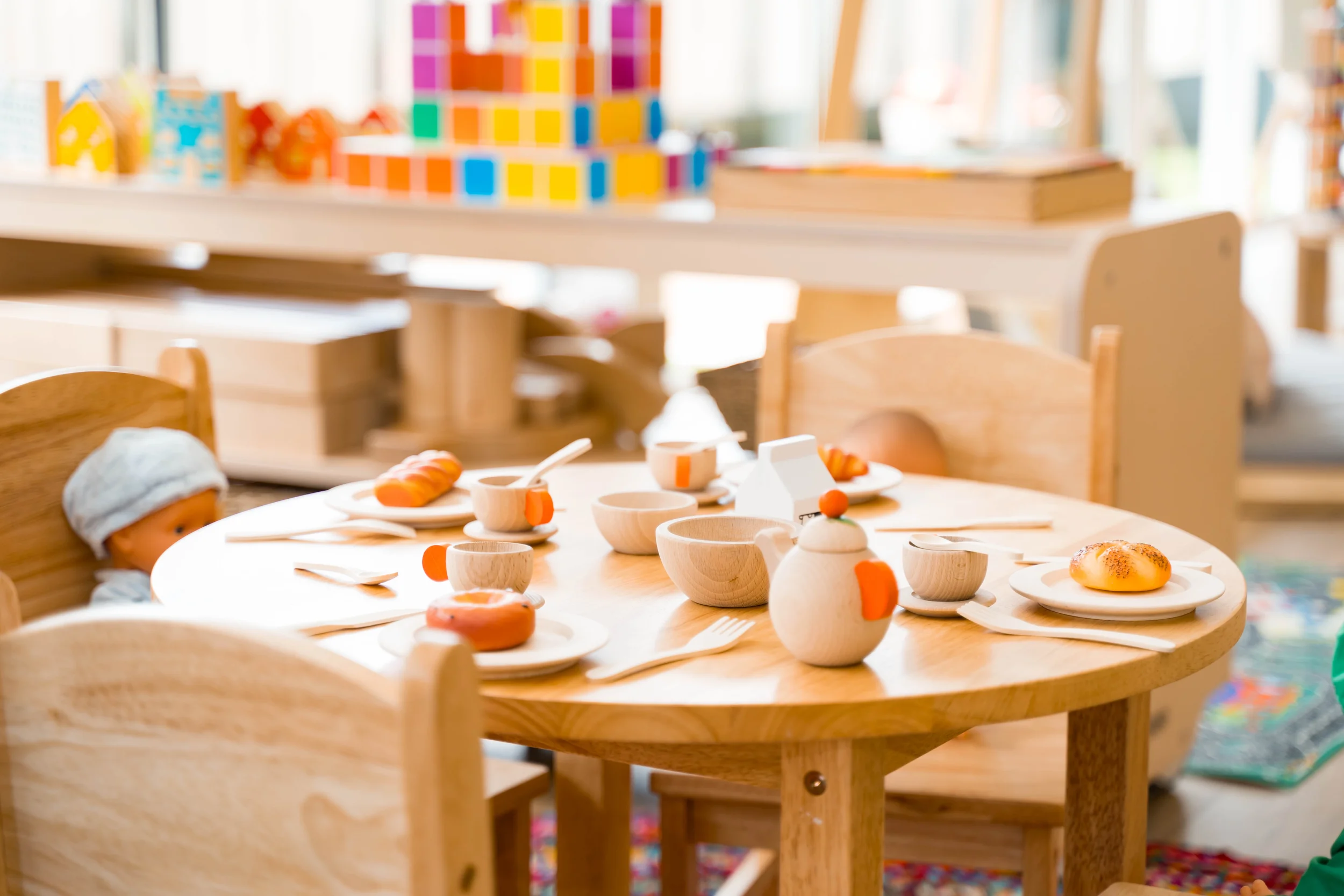
Natural Resources Should Invite Children to Think
The client has confirmed that natural resources and thoughtfully planned environments are intended to be part of the Kids Central approach.
Natural resources can include timber, stones, shells, leaves, sand, water and other open-ended materials.
Their value is not that natural materials are automatically educational. It comes from how children can use them.
A fixed toy may suggest one clear purpose. A piece of timber could become a bridge, a phone, part of a home, a road or an object in a story. Stones may be counted, sorted, transported, balanced or used to represent food in imaginative play.
Open-ended materials allow children to make more decisions.
They can support:
Imagination
Construction
Sensory exploration
Mathematical thinking
Storytelling
Collaboration
Problem-solving
Fine-motor development
Connection with the natural world
When Colyton tours become available, consider whether children will be free to use resources in different ways, or whether every activity appears designed to produce the same adult-selected result.
Indoor and Outdoor Areas Should Work Together
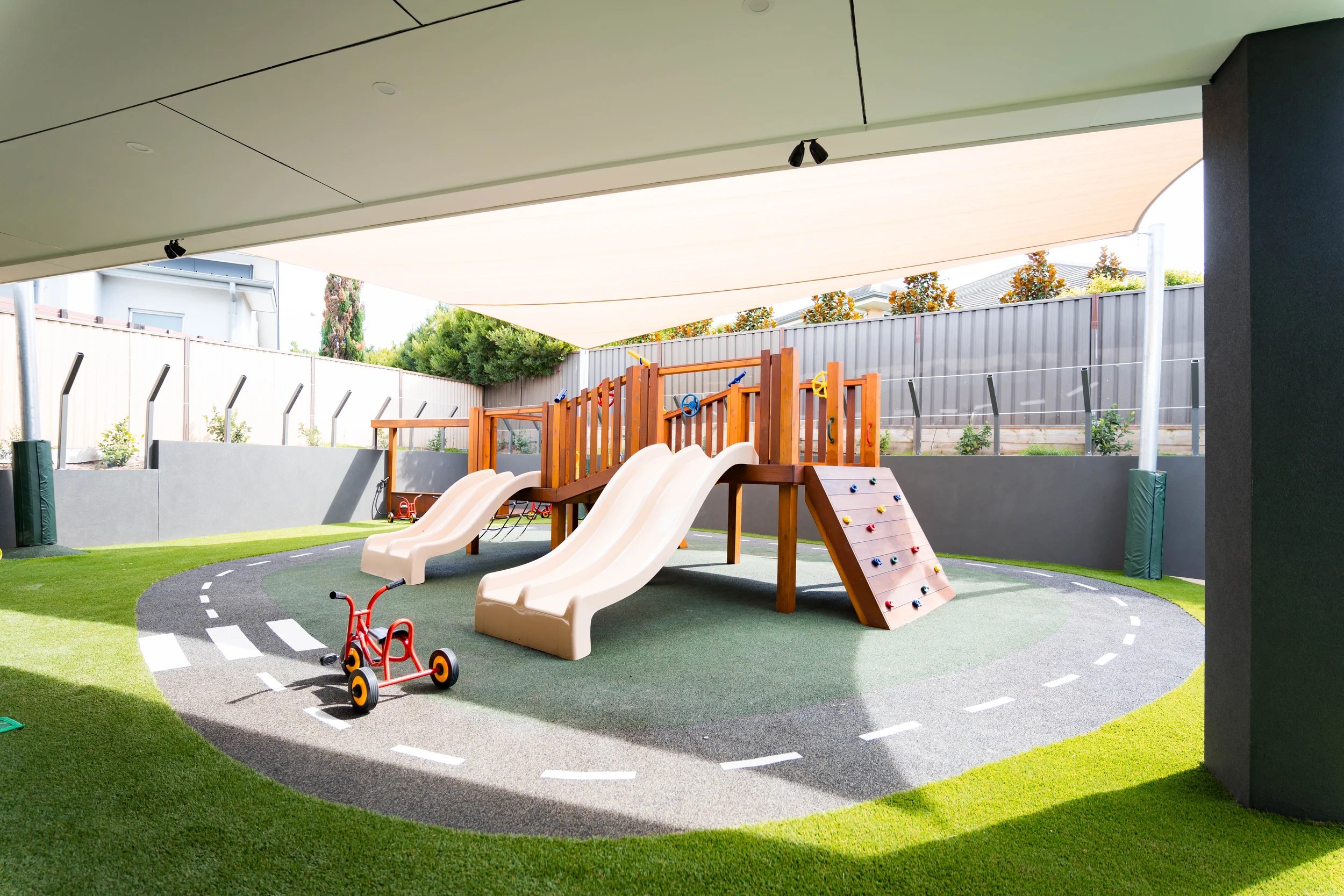
An outdoor area should not be treated only as a place where children go to release energy between indoor activities.
Outdoor learning can involve:
Physical movement
Gardening
Water play
Sand
Nature observation
Building
Drawing
Dramatic play
Quiet conversation
Safe risk-taking
Cooperation
Problem-solving
Penrith City Council maintains more than 150 play spaces across the local government area, including local facilities in Colyton. That broader community access to outdoor recreation makes it especially appropriate for a local early learning centre to treat movement and outdoor play as normal parts of childhood.
Indoor spaces should offer their own balance.
Children need places for energetic group activity, creative work, building, books, quiet concentration and rest. The room should not require every child to participate in the same type of experience at the same time.
A child who becomes overwhelmed in a large group still needs a way to belong.
Safe and Clean Should Describe Daily Practice
Every centre will tell you that safety matters.
The useful question is how that commitment appears during an ordinary day.
Kids Central’s Colyton page says the planned centre will use secure entry systems, regular health and safety checks, staff background checks and ongoing emergency training.
Families should eventually be able to ask about:
Entry and collection security
Authorised collectors
Supervision
Emergency procedures
First aid
Medication
Illness and exclusion periods
Sleep and rest
Hygiene and cleaning
Nappy-changing procedures
Food safety
Allergies
Sun protection
Incident communication
Child-protection training
Personal-device and photography practices
TheNational Quality Standard is the national benchmark used to assess approved early childhood services. Its seven areas include children’s health and safety, the physical environment, staffing, relationships, family partnerships and governance. The revised 2026 NQS applies from 1 January 2026.
A future Colyton service approval or quality rating should be considered on its own merits. Families should not assume that information attached to another Kids Central location automatically applies to the new service.
When official Colyton details become available, you will be able to useStartingBlocks.gov.au to search for published service and quality information.
Meals Will Be Part of the Daily Service
Kids Central has confirmed that healthy daily meals will be included at Colyton.
This matters because a child attending long-day care may eat several meals and snacks away from home.
A planned menu should consider:
Nutritional variety
Age-appropriate textures
Allergies
Medical dietary requirements
Cultural and religious needs
Food safety
Children learning to try unfamiliar foods
Suitable portions
Access to water
Family communication
Kids Central’s existing FAQ states that its daily fees include five meals cooked each day by an on-site cook. It also describes alternative ingredients for allergies, allergy information displayed for staff and measures intended to prevent cross-contamination. The Colyton page confirms healthy meals but does not yet publish the centre’s exact menu or allergy procedures.
Families should ask to see the planned menu when it becomes available.
It is also worth asking:
Where will meals be prepared?
How frequently will the menu change?
How are allergies verified and communicated?
How are cultural requirements handled?
What happens when a child refuses a meal?
How are feeding difficulties approached?
Will families receive updates about what their child ate?
Children should be encouraged, but mealtimes should not become a battle.
Nappies, Wipes and Sun Safety Can Simplify the Morning
The Colyton page states that nappies, wipes and sun-safety provisions will be included.
For families with babies and toddlers, those inclusions can remove several items from the daily packing list.
The practical details still matter.
Before commencement, ask:
Which nappies and wipes will be supplied?
Can an alternative be used if a child has sensitive skin?
How will nappy changes be recorded?
What sunscreen will be used?
Can families provide an alternative for medical reasons?
What clothing and hats should be brought?
How are children supported to participate in personal-care routines?
Care routines should never be handled as hurried tasks.
Nappy changes, toileting, handwashing and sun protection are opportunities for respectful interaction and growing independence.
Communication Should Begin Before Opening Day
Families should not meet the centre for the first time on the morning their child starts.
The current Colyton page promises regular communication, family participation and opportunities for feedback.
As the opening approaches, useful communication would include:
Confirmed opening timelines
Enrolment steps
Fee information
Available days
Orientation arrangements
What families need to provide
Centre policies
Room allocations
Educator introductions
Menu information
How daily updates will be shared
Who to contact with individual questions
Kids Central’s existing service uses the secure OWNA app for private family communication. The Colyton website has not yet confirmed whether the same platform will be used there, so families should check once operational information is released.
An app can be helpful, but it should not replace a relationship.
You should know who to speak with if your child has had a difficult day, your family circumstances change, or you are worried about something educators have noticed.

The First Colyton Families Will Help Shape the Community
Joining a new centre is different from entering a service with years of established routines and family relationships.
The children, educators and families will all be building familiarity together.
That can be exciting. Families may have a real opportunity to contribute ideas, share cultural knowledge and help establish traditions within the centre.
It also means leadership and communication are especially important.
A new team needs to develop shared expectations around:
How children are welcomed
How concerns are raised
How educators communicate
How rooms work together
How families participate
How staff support one another
How the centre reviews what is and is not working
I would ask how the centre leadership plans to support the team during the opening months.
The environment may be brand new, but relationships still take time.
Orientation Should Be More Than a Tour
A tour helps parents understand the centre. Orientation helps the child begin forming a relationship with it.
Kids Central has advised that its settling approach can include orientation visits, time spent getting to know the child before commencement and familiar supports such as a family photograph.
During orientation, educators can begin learning:
How your child communicates
What interests them
How they respond to unfamiliar adults
Which routines matter at home
How they show tiredness or hunger
What helps them feel calm
Which home-language words may be useful
Whether there are sensory or medical needs
What previous separations have been like
Your child may explore immediately, or they may remain close to you and watch.
Both responses provide useful information.
The purpose is not to require a child to prove they can separate before enrolment. It is to make the environment and people less unfamiliar.
School Readiness Should Not Mean Formal Lessons All Day
The new centre is expected to offer school-readiness support.
Parents should ask what that phrase means in everyday practice.
School readiness can include:
Asking for help
Communicating needs
Managing belongings
Participating in a group
Listening to another person
Developing independence with toileting and meals
Forming relationships
Coping with changes in routine
Persisting with a difficult task
Moving confidently
Becoming curious about words, books, numbers and patterns
Kids Central’s existing Transition to School Program combines play-based learning with individual planning, social skills, school routine familiarity, and early literacy and numeracy.
A child does not become ready for school by completing a large volume of worksheets.
Children need opportunities to think, communicate, move, play and participate with others.
What Has Not Yet Been Announced
Families should keep an eye out for the following information as the opening moves closer:
The exact address
The current Colyton page does not publish a street address. Do not rely on an address displayed elsewhere in the website footer, as the publicly listed contact address currently relates to the existing Edensor Park service.
A confirmed opening date
The current announcement gives 2026 as the opening year but does not state a month or day.
Operating hours
The site publishes hours for the existing service, but separate Colyton operating hours have not been confirmed publicly.
Daily fees
Meals and several daily essentials are confirmed, but the Colyton daily fee has not been published.
Approved places and room sizes
The age range is known, but the number of approved places and the capacity of each age group have not been announced.
The leadership and educator team
The website describes the educators the centre intends to provide, but staff names and individual qualifications are not currently listed.
Tour and orientation dates
Families can register interest, but public tour dates are not yet available.
Being honest about these gaps makes the article more useful than pretending every detail has already been settled.
What Registering an Expression of Interest Can Do
TheColyton Expression of Interest form asks for the guardian’s contact information, the child’s name and date of birth, any second child’s details and the weekdays required.
Providing the accurate requested days is helpful.
Think about:
Which days you genuinely need
Whether your schedule may change
Your child’s expected age when the centre opens
Whether siblings will need care
Your preferred commencement period
Any support needs worth raising early
Your best contact details
An Expression of Interest is the sensible place to begin, but families should still confirm the formal enrolment process, availability, fees and commencement details directly with the centre.
Questions to Ask Before Accepting a Place
You do not need to ask all of these at once. Keep the questions that matter most to your family.
About the opening
What is the confirmed opening date?
Is the service approval complete?
When will tours begin?
When will families receive enrolment offers?
Will the centre use a staged opening?
About your child’s room
Which room will my child join?
How many children can attend?
Who will lead the room?
How will educator consistency be supported?
What does the usual daily rhythm look like?
About the first weeks
How many orientation visits are available?
Can I stay with my child during orientation?
How do educators learn about home routines?
Can my child bring a family photo?
How will I receive updates after drop-off?
About health and safety
How is access controlled?
What are the collection procedures?
How are allergies and medication managed?
How are sleep and rest supervised?
What child-safety training does the team complete?
How will incidents be communicated?
About inclusion
How are additional needs discussed?
Can educators work with allied health professionals?
How are home languages and cultures included?
How can the program or environment be adapted?
What support is available if my child needs help participating?
About fees and inclusions
What is the daily fee?
Which meals are supplied?
Are nappies, wipes, linen and sunscreen included?
What must families bring?
Are there additional charges?
How will Child Care Subsidy be applied?
Questions Colyton Families May Have Now
Is Kids Central Colyton already open?
No. The current website continues to describe the centre as coming in 2026 and is accepting Expressions of Interest.
Where will the centre be located?
A precise Colyton street address has not yet been published on the centre page.
What ages will the centre accept?
The planned age range is six weeks to six years.
Will meals be provided?
Yes. The current announcement says healthy daily meals will be included. The exact Colyton menu has not yet been published.
Will there be a preschool or school-readiness program?
Yes. School-readiness support is part of the announced Colyton offering. Kids Central’s current transition approach considers social, emotional, physical and cognitive development alongside early literacy and numeracy.
What Families Should Ultimately Expect
A new childcare centre in Colyton should offer more than a convenient place to leave a child during working hours.
Families should be able to expect:
Educators who want to know their child
Safe and clean daily practice
Qualified staff and regulated ratios
Thoughtfully planned indoor and outdoor environments
Natural and open-ended resources
Inclusive opportunities to participate
Nutritious planned meals
Respectful personal-care routines
Honest family communication
Orientation before commencement
Learning through play
Meaningful school preparation
A willingness to answer difficult questions
Kids Central has already confirmed many of the foundations it intends to bring to Colyton. The next stage is for families to receive the practical information that turns those intentions into a real enrolment decision.
You canregister an Expression of Interest for Kids Central Colyton and identify the weekdays your family requires.
Bring your questions with you.
We would much rather explain what we are planning, listen to what your child needs, and build trust gradually than expect you to make such an important decision based on a short announcement alone.